




A video of Dennis, taken by the Equine Info Exchange editorial staff on 5/28/26, less than 2 weeks prior to his passing on 6/9/26.
The recent sudden death of Dennis, (also known as Deniz) the carriage horse, caused both sadness and outrage. What killed him? Why did he die?
As a result, the whole carriage horse tradition was under fire. Was it too hot? Was he pulling too much weight? Was he abused in some way? All of these questions are valid from concerned people and animal lovers.
Horses can die in a number of ways and of course old age is one of them. But Dennis was only 13 years old - not old for a horse who can live up to 30. How does a horse collapse and die suddenly? Usually, sudden death in a horse is due to a cardiac event, a ruptured aorta, severe internal hemorrhaging or an aneurism. The public, and we’re sure the owner of this beloved horse, were eager to find answers.
Cornell University performed a necropsy (an animal autopsy) and the results were shocking:
Poor Dennis died from eating a toxic plant.
What plant poisoned him? It was a Japanese yew, a common but highly poisonous shrub.
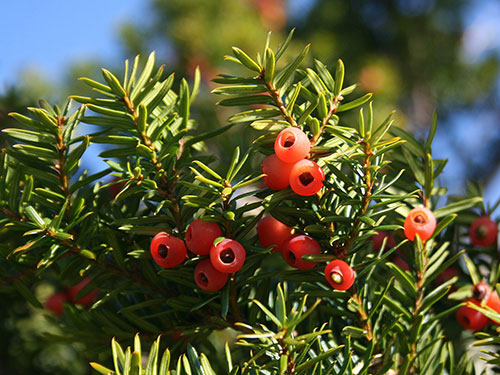
Japanese yew (Taxus cuspidata) is a highly toxic ornamental plant. According to necropsy reports from Cornell University's College of Veterinary Medicine, ingesting even a small amount can cause sudden cardiac arrest in animals and humans because of cardiotoxic compounds that disrupt the heart's electrical signals.
Here are Cornell's Key Findings on the Japanese Yew
- Toxicity Mechanism: The needles and seeds contain taxine alkaloids, which act as powerful heart depressants. It frequently causes sudden death without prior symptoms.
- No Antidote: There is no known antidote. Decontamination (such as induced vomiting or administering activated charcoal) must happen within hours of ingestion to save the affected animal or person.
This plant is toxic to both people as well as other animals, like dogs and cats. So why is this planted in a public space like Central Park where millions of people go to visit?
The Japanese yew is not indigenous to our area. It is native to Japan, Korea, northeast China and the extreme southeastern part of Russia. This means it was clearly planted with purpose. Worst of all, it was planted without any warnings. When rat poison is spread in New York City parks, advisory signs are posted to try to prevent owner and pet involvement with the area. We are warned to stay away. It was not the case here. Why weren’t there signs to warn of a highly toxic plant? Do you think the owner would let his horse Dennis go near these plants if he had seen ANY warning sign? Definitely not!
Who maintains Central Park? It is the Central Park Conservancy which is the private, non-profit organization responsible for the management, restoration, and daily care of New York City's Central Park. Founded in 1980, it operates in a public-private partnership with the city and NYC Parks to keep the 843-acre landmark thriving for its millions of annual visitors.
Why was a highly toxic plant placed in Central Park in the first place? Was it a gift? Was it inexpensive? Did it just look pretty and able to survive the New York elements without any regard to the consequences?
We learned media outlets contacted the Central Park Conservancy in a response stating it is “against the park rules” for a horse to be eating the plants. However, it is just a horse being a horse and they are clearly out of touch with horse health and safety!
In Manhattan, we used to teach riding at the historic Claremont Riding Academy. We would ride through the park on a daily basis. Like the carriage horses, saddle horses were never allowed to be outside when it was over 90 degrees. This rule was enforced for horse health, safety and welfare. However, there were NEVER any warning or signs about toxic plants! Horses would see a lush green leafy tree or bush as we walked by and of course they’d try to eat it. Horses will be horses!
The Central Park Conservancy should be questioned about putting people and animals at risk with the use of Japanese yews and potentially other toxic plant which may exist in New York City. This should never happen again. Our heart breaks for Dennis, his owner and the animal lovers everywhere who were traumatized as a result of this tragic event.
RIP Dennis, the New York City carriage horse. A death that never should have happened.
There are other intriguing articles in our section on Health & Education.