





Horse Racing
“And they’re off!” Horse racing of all types is found in our racing section, including Thoroughbred, Quarter Horse, Harness, Steeplechase and Arabian racing.
Want to get lucky? Take a look at the Wagering to help guide you. Keep track of upcoming horse races and racing events in our Calendar of Events for Horse Racing.
Want to live the dream of owning a racehorse? Check out the Breeding, Partnerships, Sales & Bloodstocks sections where you can help yourself be a force in the Sport of Kings.
Need a place to train your baby and help develop his successful career? You will find both training facilities and professional racehorse trainers in our Training section. See you in the winners’ circle!
Popular Racing Sites
Horse Racing - General Information
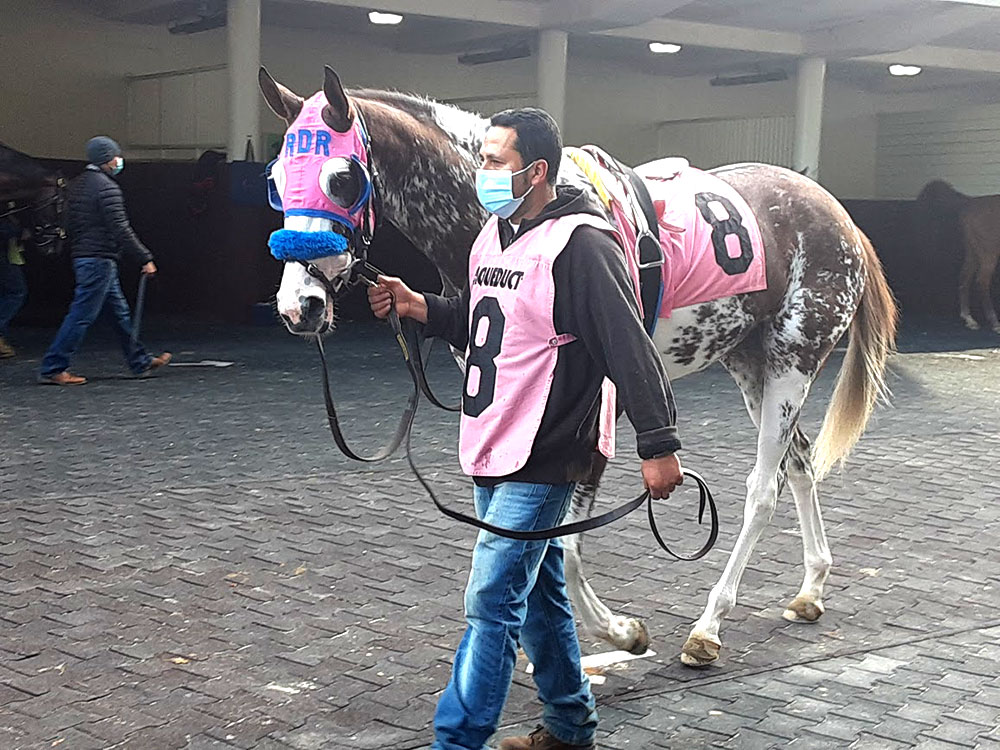
The final day of live thoroughbred racing at Aqueduct Racetrack is Sunday, June 28, 2026, culminating a 132-year run for the Ozone Park, Queens track. The historic final program is named, "It Was a Good Run." Affectionately known as "The Big A," the track opened in South Ozone Park, Queens, on September 27, 1894.
Aqueduct gets its unique name from its proximity to the historic Brooklyn Waterworks conduit that once delivered water to New York City. Over its more than 132-year history, it has served as New York City's last remaining thoroughbred racetrack.
We don’t remember the first time we went to Aqueduct, but we’ve had some memorable moments watching our favorite horses. We’ve driven there through the snow, sleet and various wintery mixes, fighting the Van Wyck Expressway which is one of the most challenging and stressful roads to drive in the country – a congestion of gridlock traffic, potholes and construction.
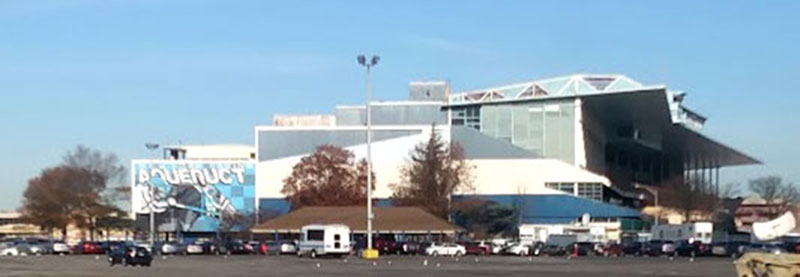
“It’s not the sexiest place in the world, but it’s not good for another racetrack to close. I understand the economics of it. In relation to other tracks which have closed in this country, this is a big one,” says a fourth generation horseman.
“It’s sad that it’s closing. I saw Ruffian run there and got my start as a jockey at Aqueduct. I even have a tattoo of Ruffian on my shoulder,” said Robert Montano, former jockey turned actor and dancer who stars in the play Small off Broadway in New York City.
Indeed, Aqueduct Racetrack has hosted many of the greatest thoroughbreds in racing history, including Triple Crown winners like Secretariat, Seattle Slew, and Assault, as well as legendary champions like Kelso, Cigar, and Riva Ridge.
The Early Years and First Renovations
Built by the Queens County Jockey Club on land leased from a local farmer, the original facility was small and modest. It was given a major boost in 1895 when wealthy tugboat captain William Carter endowed the track, launching the prestigious Carter Handicap. The track gained national prominence during its early years, notably hosting a historic 1920 showdown where Man o' War battled John P. Grier in the Dwyer Stakes, setting a speed record.
The Rebuilding of "The Big A" (1959–1980s)
By the 1950s, New York horse racing was experiencing a lull. To revitalize the sport, the newly formed New York Racing Association (NYRA) took over the facility. Aqueduct was completely leveled and rebuilt into a state-of-the-art, modern racing plant.
When it reopened on September 14, 1959, to a crowd of over 42,000, it was widely considered the most advanced racing facility in North America. Its sprawling grandstand had a capacity of 75,000. Because Belmont Park was undergoing reconstruction, Aqueduct temporarily hosted the Belmont Stakes from 1963 to 1968.
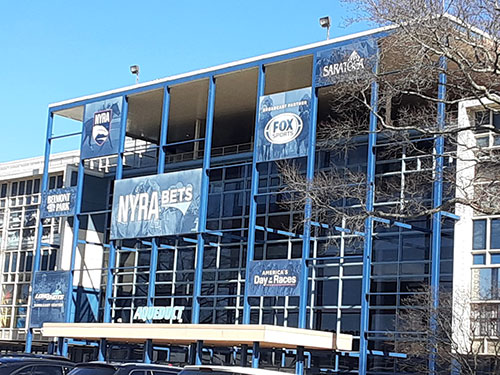
Highlights and Milestones
- 1944 Triple Dead Heat: In a rare phenomenon for stakes races, horses Brownie, Bossuet, and Wait a Bit hit the wire in a dead heat, captured by a famous photo-finish.
- Belmont Stakes: Hosted the final legs of the Triple Crown for champions like Northern Dancer during the 1960s Belmont Park renovations.
- The Breeders' Cup: Held the prestigious Breeders' Cup event in 1985.
- Papal Mass: In 1995, Pope John Paul II held a massive mass at the track, drawing a record crowd of 75,000 people.
The Casino Era and Recent Years
In late 2011, the track expanded its entertainment offerings with the opening of a massive multi-level casino—Resorts World New York City—operated by the Genting Group in portions of the grandstand. NYRA also updated the racing surfaces, replacing the inner dirt course with a second turf course in 2017.
Now, Aqueduct Racetrack is permanently closing its historic horse racing operations to consolidate all downstate New York racing to a newly modernized Belmont Park. Resorts World is expanding, with a $5.5 billion investment in the 72-acre Aqueduct site. This marks the end of racing in New York City.
Goodbye, Aqueduct, and thanks for the memories.
All photographs courtesy of the EIE Editorial team.
You can find more interesting articles in our section on Racing & Wagering.
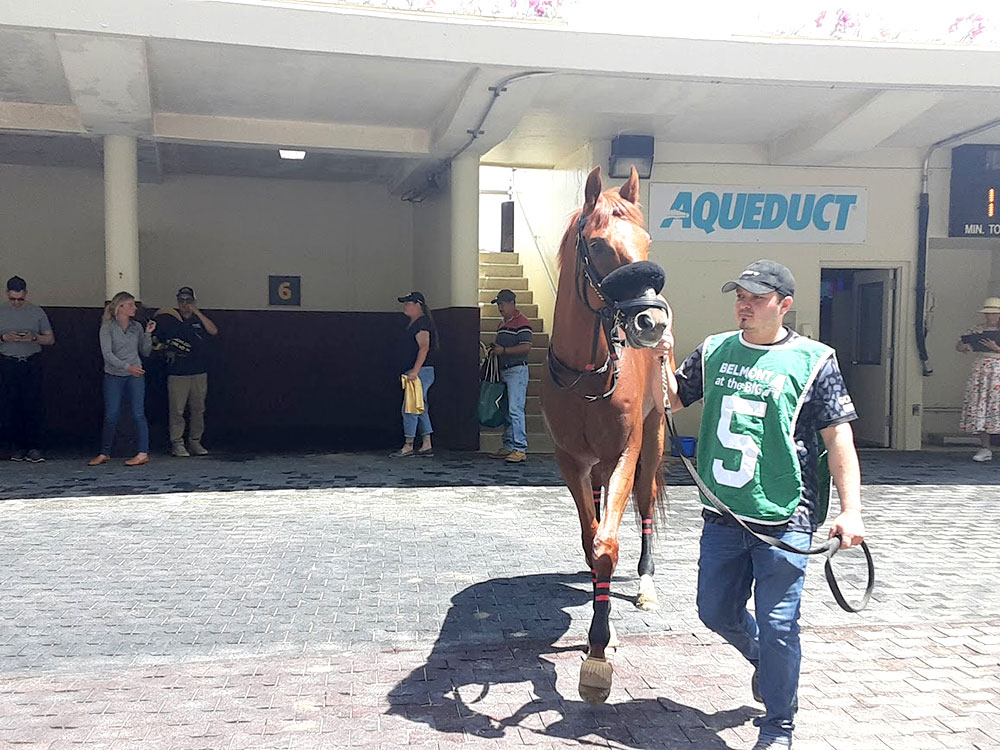
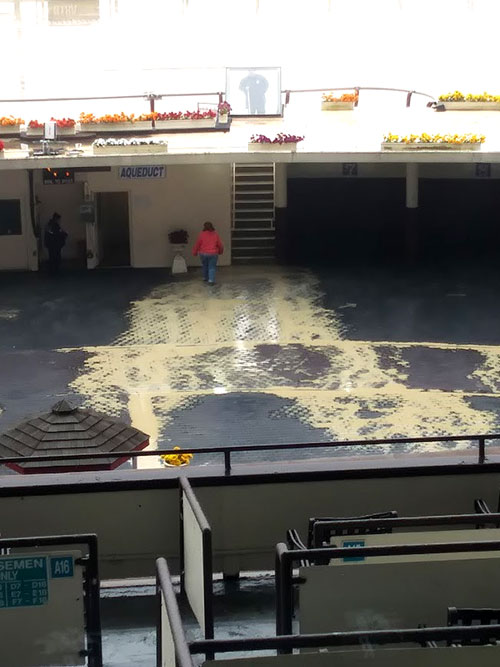
Cascading Down the Stairs from the Racetrack During a Storm
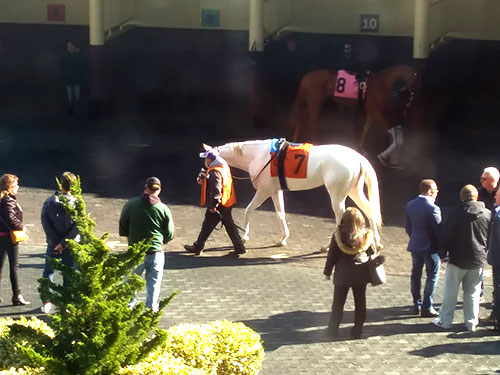
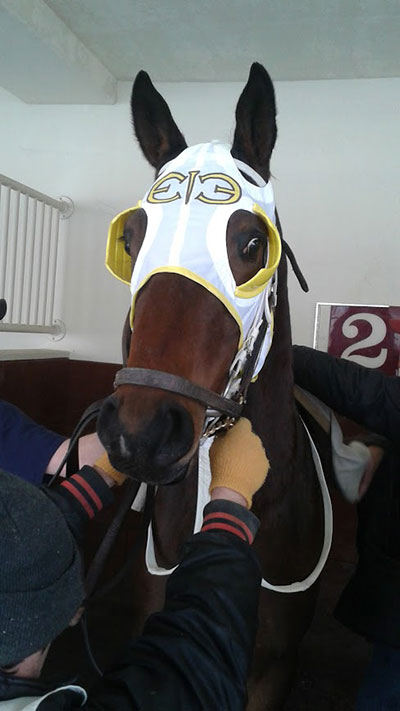
A fire destroyed a barn on the backstretch of the Saratoga Harness Racetrack the morning of June 16th. Barn 21 was home to the horses who perished.
We were shocked and devastated to receive a phone call from a horse trainer this morning that a fire broke out at the Saratoga Harness Racetrack. We raced over to find the air thick with smoke and the smell of burning hay and metal. It reminded us of the smell we had known from the World Trade Center on 9/11 and triggered that horrific memory.
Reports indicate that up to 17 horses perished in the fire, although the exact count has yet to be determined.
It was impressive to see the teams of firefighters on the scene and the support from the staff at the track. The remains of the barn were removed while the firefighters hosed down the still smoldering embers. They respectfully covered the deceased horses with white sheets.
Sadly, we saw backstretch workers who spend their lives caring for horses in complete shock. Some were sitting on the grass, sobbing emotionally at the loss of these beautiful, innocent animals. The smoke continued to fill the air as firefighters solemnly covered the remains of the fallen horses. It was heartbreaking to witness this tragic event and struggled to cover it on a professional level. As owners, we know horses are cherished family members and grieve at this devastating loss.
Trainers who stabled there included Abigail Adisit and her father Eric, a long time horseman and Standardbred trainer.
How did this happen? We still don't know and the matter is under investigation. Says one horseman who didn't wish to be identified, "These are old barns. It may have been an electrical problem." In speaking with another horseman, he stated, "Everything in a barn including hay, straw and liniment can be a fire accelerant. Most of these barns were built for winter racing and are enclosed, making it more difficult for horses to evacuate."
We hope to learn more about what caused this tragic event and will provide updates as the story unfolds.
Our heartfelt condolences are with the trainers, owners and people who were impacted by this tragedy.
Click to view any image larger in a slideshow.


All photos and video courtesy of the EIE Editorial staff.
There are more interesting articles in our section on Racing & Wagering.
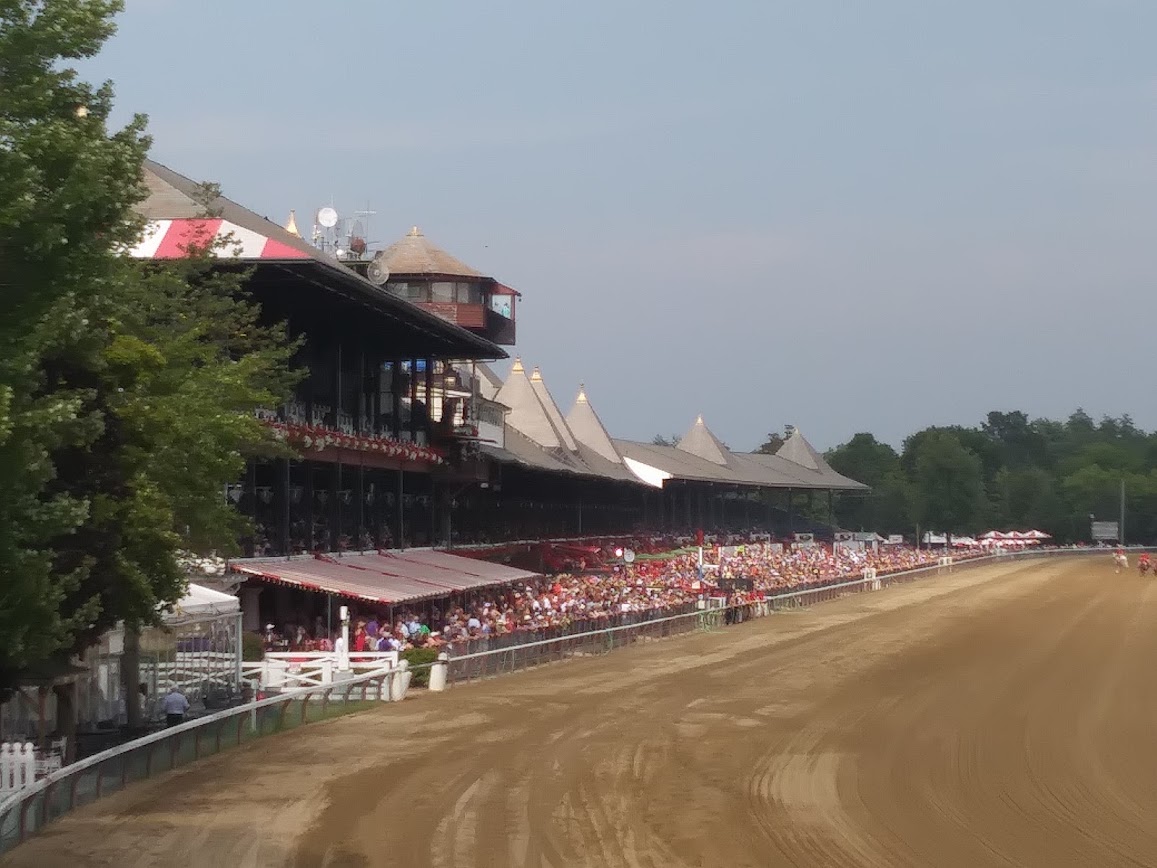
A stumble at the gate, 12 lengths of ground to make up, and a trainer born in the same town where she just rewrote the record books. The 158th Belmont Stakes delivered more than a result.
By the time Jose Ortiz had Golden Tempo halfway down the Saratoga backstretch on June 6, the colt was stone last of nine. He had stumbled out of Gate 9 at the break, lost his footing, and let the field get eight to ten lengths clear before Ortiz had even settled into his rhythm. For the second time in five weeks, the question was the same: is there enough track left?
There was. Golden Tempo swept around the outside on the far turn, collared Commandment and the fading 8-5 favourite Renegade inside the final furlong, and won the 158th running of the Belmont Stakes by 1 1⁄4 lengths in 2:03.49 on a fast Saratoga dirt track. The colt, bred and owned by Phipps Stable and St. Elias Stable and sired by Curlin, posted an Equibase Speed Figure of 100, identical to the figure he earned at Churchill Downs on May 2, and moved to $4.6 million in 2026 earnings as the top-ranked horse on the Equibase leaderboard.
The performance confirmed what the prep record had suggested. Golden Tempo won the Lecomte Stakes at Fair Grounds in January before finishing third in the Louisiana Derby in March. Under the oversight framework introduced by the Horseracing Integrity and Safety Authority, which has governed track safety and medication testing across American racing since 2022, Golden Tempo cleared every compliance barrier cleanly on both Triple Crown starts, a detail that carries weight as scrutiny of the sport’s integrity standards continues heading into summer.
DeVaux Returns to the Town That Made Her
Cherie DeVaux was born in Saratoga Springs. She began her training career at this track. On Saturday evening, standing in the winner’s enclosure with Golden Tempo, she became the first female trainer in history to win multiple Triple Crown races and the second woman to train a Belmont Stakes winner, after Jena Antonucci won with Arcangelo in 2023.
“Golden Tempo is amazing. Jose is amazing,” DeVaux said at the post-race press conference. “I think he needed to do this to show that he was meant to win the Derby and that he is a horse that belongs in that conversation of being one of the top 3-year-olds.” The decision to bypass the Preakness Stakes, the same call made by Sovereignty’s connections in 2025, had attracted criticism in the weeks between Louisville and Saratoga, framed by some as an avoidance of competition. The result made that framing look thin.
Ortiz was surgical. “I followed them closely in the second turn,” he said. “They started to pick it up, so I did as well.” From 12 lengths off the pace to a clear margin winner in under ten furlongs, the ride required a precise read of a field that had no dominant early pace influence once Renegade faded from his brief stint on the front end. Ortiz now has two Triple Crown wins to his name: Tapwrit in the 2017 Belmont, and both the Derby and Belmont legs of the 2026 series with Golden Tempo.
Renegade Flattens, Commandment Earns Respect
Todd Pletcher’s Renegade had carried 8-5 favouritism into the gate. The colt had finished second to Golden Tempo at Churchill Downs, ridden by Irad Ortiz Jr., Jose’s brother, and briefly showed at the front of the Saratoga stretch before he flattened. Third was the result. Renegade covered the same 1 1⁄4 miles that Golden Tempo handled with authority, but his final quarter split told a story the market had not priced in: with a modest early tempo, a pure closer was always going to have the advantage over a horse who needs to use energy to establish position.
Brad Cox's Commandment, trained with the Belmont as a primary objective after finishing seventh at Churchill Downs, ran the race of his career to grab second under John Velazquez. An analyst speaking to Casinos.com, which publishes a widely used guide to the best casino apps and independent online casino operator coverage, noted that Golden Tempo's matching 100 speed figures across two contrasting pace scenarios placed his closing efficiency among the most repeatable seen in the American classic series in several years. "The figure held in a race that ran completely differently from the Derby," the analyst said. "Most closers regress when tempo drops. He didn't."
What Saratoga’s Final Belmont Tenure Means for the Triple Crown Calendar
The 2026 running is the third and final time Saratoga Race Course hosts the Belmont Stakes as a temporary home. Belmont Park’s renovation is scheduled for completion in late 2026, with the race expected to return to its traditional Elmont, New York venue in 2027. The Saratoga edition has run at 1¼ miles rather than the classic 1½-mile distance, a change forced by the main track configuration, and some critics have argued the shortened trip alters the race’s identity as a test of stamina. Golden Tempo’s performance at least settled one aspect of that argument. The colt covered 1¼ miles twice in five weeks and posted matching speed figures each time. DeVaux has spoken about autumn targets, and the $4.6 million earnings total confirms the campaign remains active. Whether the traditional 12-furlong trip would have suited him differently is speculation. What is not speculation is that he has beaten every horse put in front of him in 2026 when it mattered.
For race fans tracking the summer stakes calendar, Equine Info Exchange’s horse racing wagering guide covers the bet types and strategies relevant to graded stakes racing as the season moves toward Saratoga’s main summer meet and the lead-in to the Breeders’ Cup in November.
What Saratoga produced on June 6 was a story for the city itself: a trainer who grew up on these grounds, a closer that does not need ideal conditions to find the front, and a result that settled five weeks of debate about whether skipping the Preakness was calculated or cautious. Cherie DeVaux called it gratitude. The margin of victory suggested it was something more deliberate than that.
There are more informative articles in our section for Racing & Wagering.
This was the third and final year that the Belmont Stakes was run at the Saratoga Race Course Saratoga Springs, NY while Belmont Park in Elmont, NY, finished its renovations.
It was a huge day for trainer Cherie DeVaux as her trainee, Golden Tempo, who won the Kentucky Derby, also captures the Belmont Stakes. This makes the Saratoga native the first woman to capture two legs of the Triple Crown and only the second female trainer to win the Belmont Stakes. The first woman to win a Triple Crown race was Jena Antonucci when she trained Archangelo to score a victory in the 2023 Belmont Stakes.
Golden Tempo was masterfully ridden by Jose Ortiz, coming from the back of the field late to overcome Commandment and the favorite Renegade, ridden by Jose’s brother Irad Ortiz Jr.
Due to the change of venue, the Belmont Stakes was run at 1 ¼ miles but the “Test of Champions” will return to its 1 ½ mile distance next year when it returns to Belmont Park.
Golden Tempo is owned by the Phipps Stable and Vincent Viola’s St. Elias Stable.
St. Elias Stable also had a great day, winning the Grade 1 Resorts World Casino Manhattan Stakes with Deterministic.
The Hill ‘N’ Dale Metropolitan Mile, known fondly as the “Met Mile,” was won by Nysos, who finished the time in 1:34.85, only a tick off the track record of 1:34.72 set by Key Contender in 1992. Nysos beat Knightsbridge and the former Preakness Stakes winner Journalism, who finished third.
Cherie DeVaux has another superstar in her barn as Englishman won the Woody Stephens Stakes by 5 ½ lengths, tying the time set by Darby Creek Road in 1978.
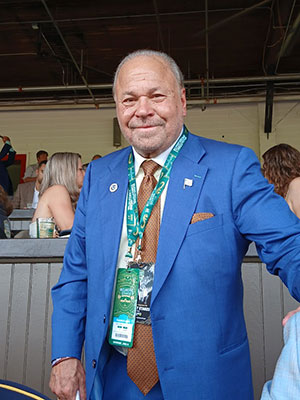
The event drew a tremendous crowd and we had the opportunity to meet people like actor Bo Dietl, the famed former NYPD detective turned actor who starred in movies including The Englishman, Goodfellas and The Wolf of Wall Street. His autobiography One Tough Cop was turned into a movie starring Stephen Baldwin.
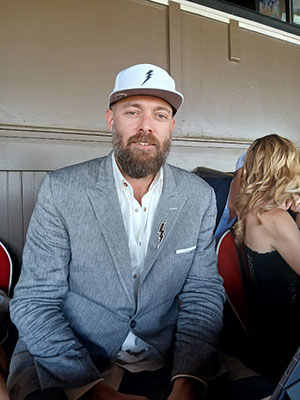
Former Major League Baseball player Jayson Werth, who won the World Series in 2008 while he was with the Philadelphia Phillies, enjoyed the races with his friends and fans. Werth jumped onto the racing scene when he became involved with the partnership in the horse Dornoch, who won the 2024 Belmont Stakes.
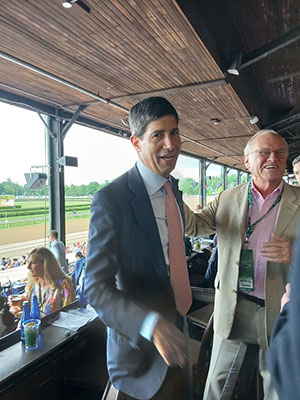
The new Chair of the Federal Reserve, Kevin Warsh, was also in attendance. The native of nearby Loudonville, NY, Warsh replaces Jerome Powell. There was no word from him about lowering interest rates!
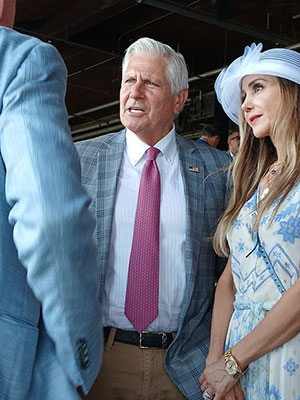
Governor of New York State
Bruce Blakeman, who is running for Governor of New York State, was also present. Traditionally, the current Governor attends the Belmont Stakes and helps present the winner’s trophy but Kathy Hochul was noticeably absent.
'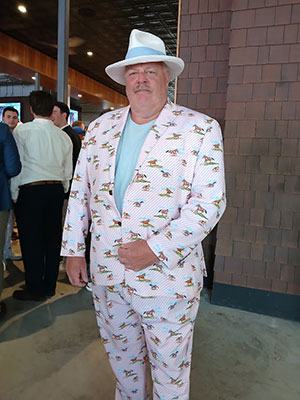
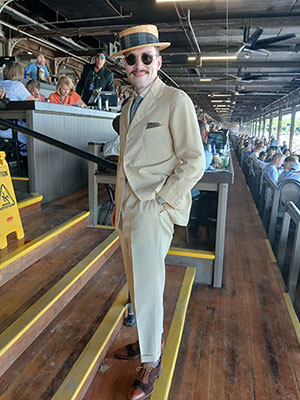
In addition to horse racing, we enjoyed the warm weather, nice people and fabulous fashion. The Saratoga racing meet begins on July 3th and runs through September 6th, 2026.
All photos courtesy of EIE Editorial, © 2026, all rights reserved
There are more interesting articles in our section on Racing & Wagering.
Are you interested in promoting your business or sharing content on EIE? Contact us at info@equineinfoexchange.com

There’s something undeniably captivating about horses. Even in a world dominated by smartphones, virtual reality, and high-speed digital entertainment, horses continue to hold a special place in our hearts. Whether you see them galloping across a movie screen or guiding your character through a video game, they bring a sense of wonder that feels both nostalgic and exciting.
So, what makes horses so timeless? Why do they still stand out in modern entertainment like perya game? The answer lies in their ability to connect emotion, action, and storytelling in a way that feels natural and unforgettable.
The Emotional Power of Horses
Horses are more than just animals—they symbolize freedom, strength, and companionship. When you watch a horse run freely, it’s hard not to feel inspired. That sense of movement and energy creates a powerful emotional response that few elements in entertainment can match.
In stories, horses often represent loyalty and courage. They are trusted companions, silent heroes, and sometimes even the driving force behind a character’s journey. This emotional connection is what keeps audiences engaged and invested.
Horses in Movies and Series
From epic adventures to historical dramas, horses have always played a major role in visual storytelling. Imagine a medieval battle scene or a western showdown without horses—it just wouldn’t feel complete.
They add realism and depth, making scenes more dynamic and believable. Whether it’s a dramatic escape or a peaceful countryside ride, horses help set the tone and enhance the overall experience perya game.
The Digital Evolution: Horses in Games
In today’s gaming world, horses have taken on a whole new role. They’re no longer just background elements—they’re interactive companions. Many modern games perya game allow players to ride, train, and even customize their horses. This level of interaction creates a deeper sense of immersion. You’re not just watching the story—you’re part of it. Riding through open landscapes, completing missions, and building a bond with your horse make the experience more personal and engaging.
Carnival Fun Meets Modern Gaming
Interestingly, horses have also found their way into casual and carnival-style games. These games bring a lighter, more playful side of entertainment while still capturing the thrill of competition.
If you’ve ever experienced a perya game on GameZone, you’ll know how exciting it can be. The colorful design, fast-paced action, and unpredictable outcomes create a fun and engaging environment. Adding horse-themed elements to these games brings a unique twist that blends tradition with innovation.
It’s like bringing the carnival to your screen—anytime you want.

Experience the Fun for Yourself
If you’re looking for something that combines nostalgia with modern excitement, exploring games inspired by horses and carnival themes is a great place to start. Platforms like Perya game on GameZone bring that classic fun into a digital space, making it easy to enjoy anytime, anywhere.
Whether you’re playing for fun, relaxing after a long day, or competing with friends, the experience is always fresh and entertaining. It’s simple, exciting, and surprisingly addictive—in the best way possible.
FAQs
- Why are horses still popular in entertainment today?
Horses represent freedom, strength, and emotion, making them powerful elements in storytelling across movies, games, and modern digital platforms. - Are horses featured in modern video games?
Yes, many games include horses as companions or transportation, adding realism and immersion to the overall gaming experience. - What is a perya game on GameZone?
It’s a digital version of traditional Filipino carnival games, offering fun, colorful, and interactive gameplay online.
There are more interesting articles in our section on Recreation & Lifestyle.
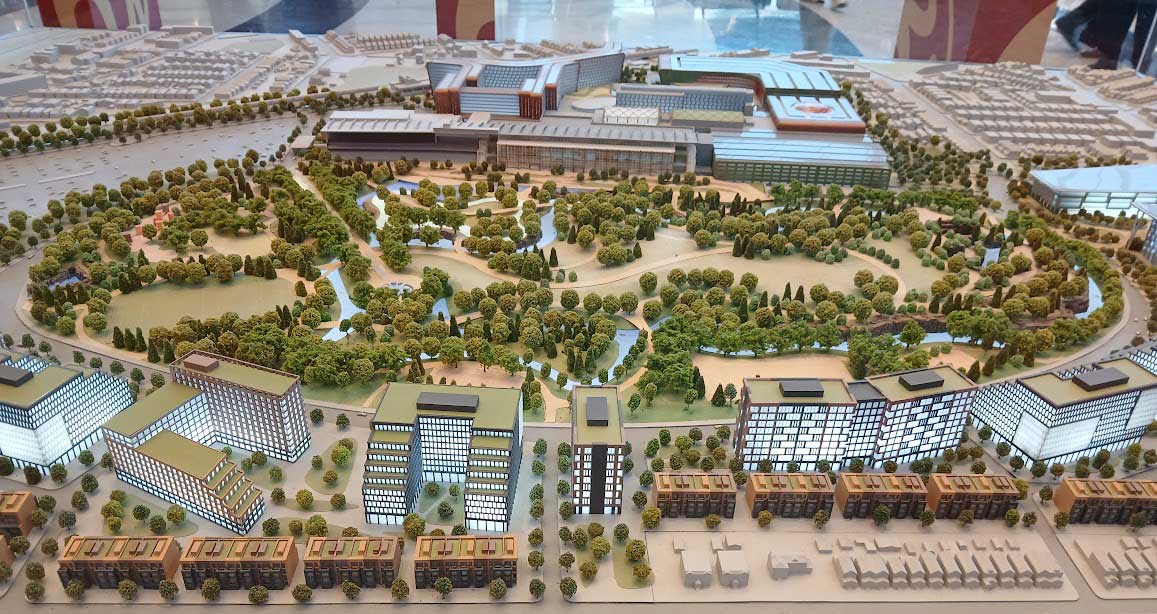
We are entering a new era as we say goodbye to Aqueduct Racetrack. Aqueduct Racetrack will host its final horse races on June 28, 2026, after which it will close permanently to be redeveloped. The site, a storied venue in South Ozone Park, Queens, is being taken over by New York State, with its grounds—including the track surface—repurposed for a major expansion of the adjacent Resorts World New York City casino, which launched live table games in April 2026
Aqueduct Racetrack in Queens, New York, was founded and opened on September 27, 1894, by the Queens County Jockey Club and named for its proximity to the water conduit for the Ridgewood Reservoir. Built on former Brooklyn Water Works property in Ozone Park, Queens, it was famously renovated into the modern "Big A" structure in 1959. It is the second oldest of the three tracks currently operated by the New York Racing Association. Saratoga racecourse is the oldest, established in 1863.
Although there is great excitement for plans to rejuvenate this area, a great many will miss this subway accessible racetrack where many champion horses raced. Let’s take a look back on some key historical highlights at Aqueduct which include:
- Major Stakes Races: Including the prestigious Wood Memorial (a major Kentucky Derby prep), the Cigar Mile, and the Carter Handicap.
- Temporary Home of the Belmont Stakes: Due to renovations at Belmont Park, Aqueduct hosted the final leg of the Triple Crown from 1963 to 1967.
- 1985 Breeders' Cup: The second-ever Breeders' Cup World Championships were held at the venue.
- Secretariat's Farewell: Triple Crown winner Secretariat was paraded for the final time on November 6, 1973.
- Historic Triple Dead Heat: In 1944, the Carter Handicap ended in the first and only triple dead heat for win in a stakes race.
- Cigar's Winning Streak: Hall of Fame horse Cigar began his 16-race winning streak with victories at Aqueduct in 1994.
- Other Key Races: The Jockey Club Gold Cup (1958–1974) and the Display Handicap were held here.
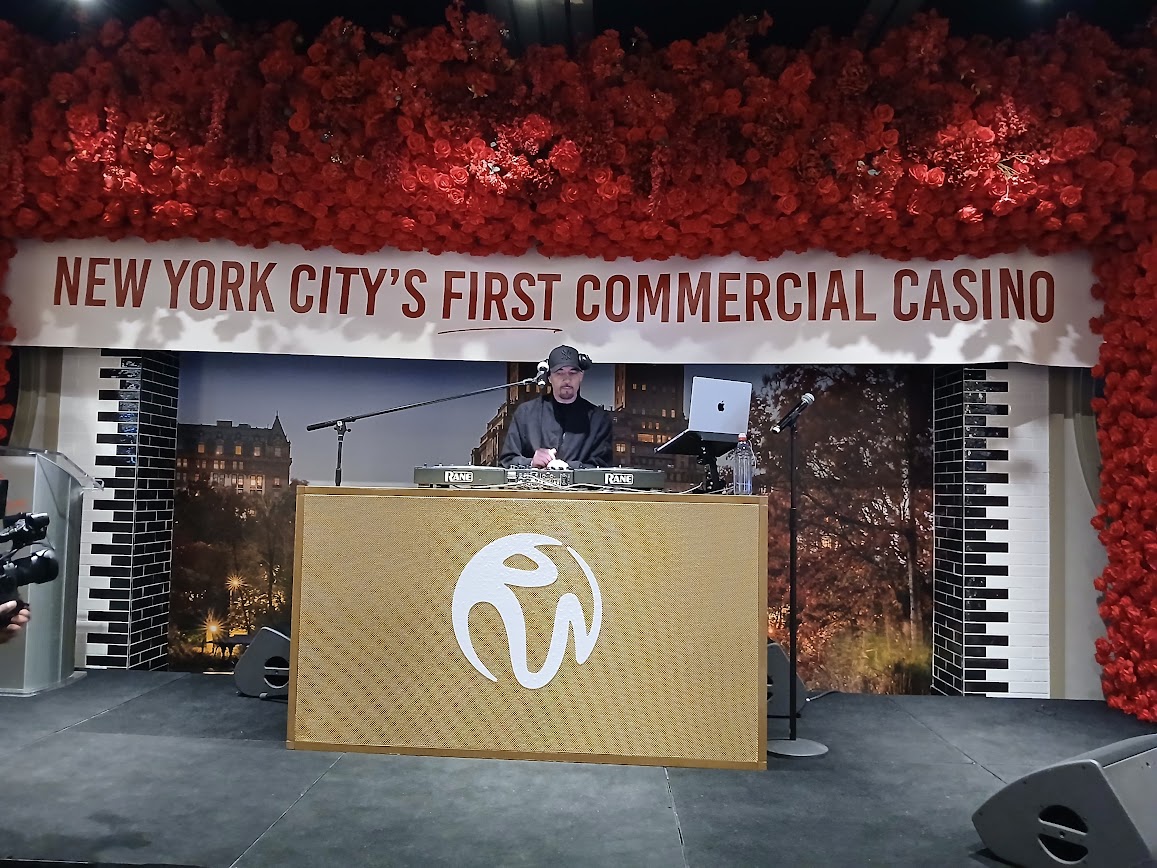
So, we are now entering a new era where all downstate racing will move to the newly renovated Belmont Park as the historic Aqueduct racetrack comes to a close.
You can find more informative articles in our section on Racing & Wagering. Take a look at our Curated Amazon Store for our selections in a wide variety of categories!
Are you interested in promoting your business or sharing content on EIE? Contact us at info@equineinfoexchange.com
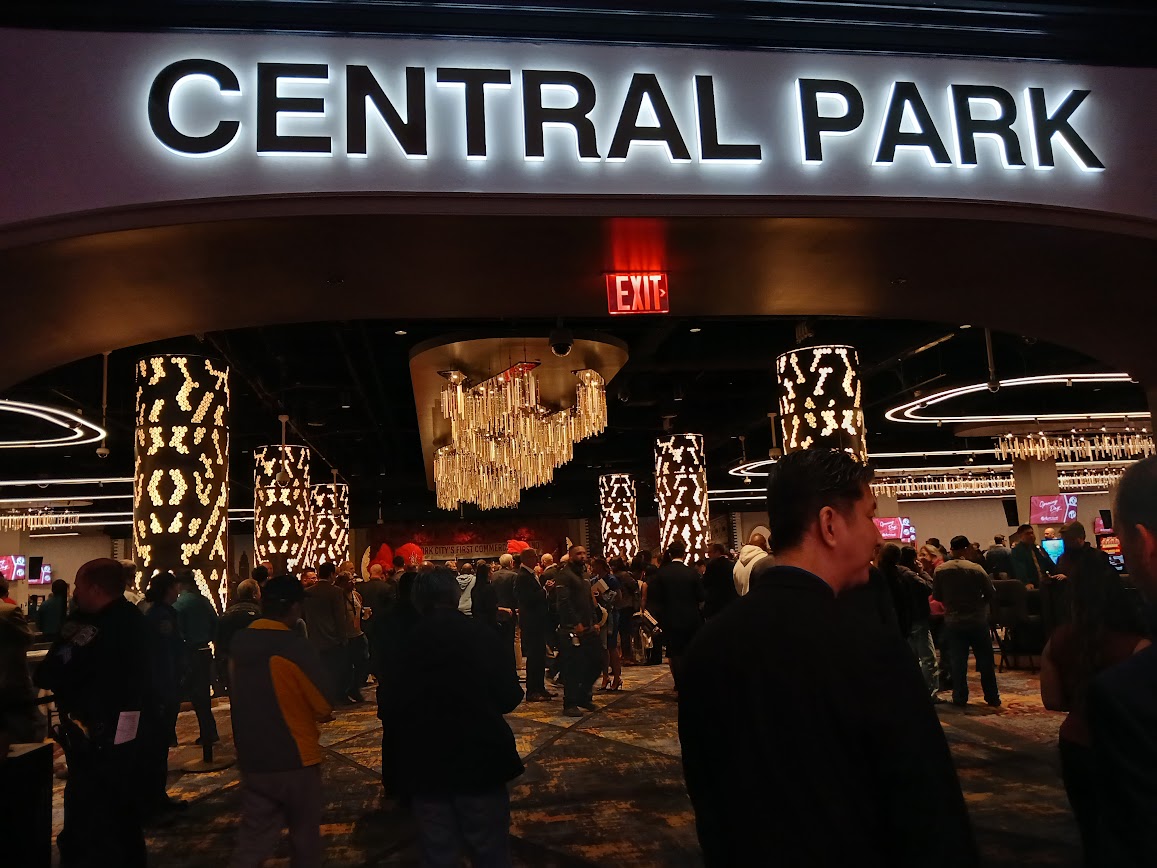
Read the press release about the historic Resorts World ribbon cutting ceremony "Resorts World New York City Cuts The Ribbon On Live Table Games And Commercial Casino Slots, Marking A Historic First For New York City".
Genting Chairman KT Lim Joined by Hip-Hop Legend NAS, Elected Officials and Community Leaders Celebrate the Launch of Live Table Gaming and Commercial Casino Slots -- A Major Step Toward New York City's First True Integrated Resort, Opening Just Four Months After Licensure
QUEENS, NY — Resorts World New York City (RWNYC) today officially opened its 242 live table games floor in a ribbon-cutting ceremony and ceremonial first roll of the dice hosted by Genting Chairman KT Lim. Another floor with 2,507 commercial casino slots, some with million dollar plus jackpots is also opened at the same time.
Hip-Hop legend and RWNYC partner NAS, elected officials, community partners, and company leaders were all on hand for the milestone event which marks the first time live table games have ever operated in New York City and cements RWNYC’s place in the history of New York’s gaming and hospitality landscape.
“With Chairman Lim’s first roll of the dice, we celebrate a milestone that took nearly 15 years of hard work, strong partnerships, and an unwavering belief in what this property could become for New York," said Robert DeSalvio, President, Genting Americas East. "Live table gaming is officially open in New York City for the first time ever, and on day one we are contributing to the State’s economy, supporting jobs, and giving back to New Yorkers. With our planned $5.5 billion expansion, this is only the beginning of something much bigger for Resorts World and for New York.”
More than 240 table games including blackjack, craps, baccarat, and roulette were debuted on a newly reimagined gaming floor alongside more than 2,500 new commercial slot machines placed on the second and third floor of the existing Aqueduct Facility. The number of tables and commercial slot machines will double with the progressive opening of the ground and first gaming floors later in the year. The launch represents a defining moment not only for Resorts World New York City, but for the entire state, as the facility begins a new chapter of gaming and entertainment while continuing its role as a major economic engine. The combination of live games and slot machines has created the first-ever full casino experience in New York City.
Celebrating a Historic Moment for New York
The addition of live table games is the first component of RWNYC’s $5.5 billion investment in the 72-acre Aqueduct site. Future plans include a new 7,000-seat multipurpose entertainment venue, new hotel and more than 12 acres of new public green space. Beyond the site, RWNYC has proposed a $2 billion community benefits package, with a commitment to build up to 50,000 units of workforce housing across the five boroughs, and a $100 million infrastructure improvement package.
"After years of careful planning and dutifully navigating the state gaming license process, Queens has officially hit the jackpot with today's opening of Resorts World's expansion. From providing top-tier entertainment to investing billions of dollars in benefits into our communities to creating thousands of good-paying union jobs for our neighbors, Resorts World continues to go above and beyond when it comes to making a positive impact in our borough," said Queens Borough President Donovan Richards Jr. "Today marks a momentous step forward in boosting the economic vitality of South Queens, and I congratulate our partners at Resorts World on today's milestone."
Economic Impact Starting Day One
With the launch of live table gaming, RWNYC immediately adds incremental economic activity to New York State through new gaming tax revenue, expanded employment, and increased visitor spending. RWNYC is expected to generate hundreds of million dollars for the MTA through its $500 million license fee, and new tax revenue for the MTA, as well as additional amounts for the State public education system, adding to the $5 billion that RWNYC has delivered since launching in 2011. RWNYC is already one of the largest employers in Queens, and the live table gaming floor expands that footprint further with hundreds of new positions across gaming operations, hospitality, and support services. In early April, RWNYC began a series of orientation sessions for the 1,250 new employees, onboarding them ahead of the live table game launch. The facility currently has 2,200 employees with 500 more expected by this summer.
The ribbon cutting and ceremonial first dice roll is one milestone in a broader expansion of the Resorts World New York City campus. The property's continued growth, including the forthcoming debut of more table games and commercial slots towards the end of the year, signals a long-term investment in Queens and in New York’s emergence as a premier gaming and resort destination.
Additional announcements regarding Resorts World New York City’s continued expansion will be shared in the coming months.
Here’s what elected officials are saying about Resorts World NYC:
“I have fought for Queens my entire career because I know what this borough is capable of, and Resorts World New York City is proof of that potential realized,” said Congressman Gregory Meeks. “This project is about jobs, economic growth, and real opportunity for the people I represent. It is creating pathways to good-paying careers, generating revenue for our community, and strengthening Queens’ future. Resorts World has been a true partner, and today we celebrate the impact that partnership continues to deliver.”
“I have stood with Resorts World through every step of this process because I believed in the vision and I believed in their promise to Queens, given their 15-year record of delivering,” said Senator Joseph P. Addabbo Jr., Chairman of the New York State Senate Committee on Racing, Gaming and Wagering. “Today that promise is fulfilled. The jobs are here, the investment is here, and the positive impact on our community starts with the first hand dealt and the first roll of dice."
“Resorts World New York City has long been a major economic engine for Southeast Queens, creating jobs and driving investment in our community. The addition of live table games marks an important step forward, bringing new opportunities for employment, tourism, and local growth. As we consider the future of gaming in New York, expansion efforts must continue to prioritize community impact, workforce development, and pathways for local residents to benefit directly. "I look forward to seeing how this next phase continues to strengthen our local economy," said New York State Senator Leroy Comrie.
“This is a historic day for our state and for every New Yorker who believed that world-class gaming and hospitality belonged here at home," said New York State Senator Roxanne Persaud. “Resorts World New York City has earned this moment through years of community investment and a genuine commitment to our neighbors. I look forward to what comes next.”
“For the residents of Southeast Queens, today is a milestone. Resorts World New York City has long been a neighborhood anchor—an employer, a partner, and a true community builder,” said New York State Senator James Sanders Jr. “The launch of live table gaming, the first time this state has ever seen it, builds on everything they have already contributed to this borough. This addition will bring even more jobs and opportunity to our communities, and I’m proud to stand here for this moment.”
“Resorts World New York City has been a great partner to the many communities of Queens. There needs to be continued drive for economic growth, job creation and support of public safety through investment in the surrounding neighborhoods. I congratulate Resorts World on this milestone and its positive impact across Queens and beyond," said Queens District Attorney Melinda Katz.
“This is a great day! The wait is finally over and I couldn’t be more excited for what’s to come! With the expansion of Resorts World NYC we will see live table games with thousands of good paying jobs - showing off an amazing partnership that will bring economic development to South Queens,” said Assemblywoman Pheffer Amato. “When I Chaired the Community Advisory Council we heard how Resorts World NYC has supported our community which ensured we advanced this proposal. It’s not a gamble to bet on Resorts World NYC and I’m rolling the dice in their favor!”
“The opening of live table gaming at Resorts World New York City belongs to this community,” said Assemblymember Alicia Hyndman. “I have seen firsthand how Resorts World invests in our neighbors, from workforce training programs to strengthening good-paying careers that keep families here. Today’s historic first is a testament to what happens when a company keeps its promise to the people of Queens."
"Resorts World New York City has been delivering for Queens for over a decade, and today they have done it again. The launch of live table gaming is a historic first for New York City and a milestone that will create real economic opportunity for residents across our borough. I am proud to stand with Resorts World on this remarkable day," said Assemblymember David Weprin.
"Today marks a major milestone as Resorts World New York City officially opens as a full-service casino with live table games, becoming a true, traditional gaming destination for New Yorkers and visitors alike,” said Assemblymember Michaelle Solages. “This expansion is already creating thousands of good-paying jobs, with even more on the way, and opening doors to careers in hospitality, gaming, and beyond. These are real opportunities, accessible to people from all backgrounds, and a pathway to long-term economic mobility for working families. This moment represents more than just an expansion: it is the realization of a long-anticipated vision for New York’s gaming industry and a significant boost for our economy. I commend Resorts World New York City on this achievement."
"Resorts World New York City has long been a partner to Southeast Queens, and today that partnership takes on a new and exciting form,” said Assemblymember Khaleel Anderson. "With a robust community benefits package, infrastructure commitment, and hundreds of local residents already trained and employed, this is a proud day for those who call Southeast Queens home.”
"Resorts World New York City has been committed to this community for over a decade, and today that commitment reaches a new level with jobs for our neighbors and real economic opportunity for District 28,” said New York City Councilmember Ty Hankerson. "I am proud to be the councilmember for this community on one of the most historic days in New York City history."
“Resorts World has shown what it means to be a true community partner consistently investing in Southeast Queens, creating jobs, supporting local initiatives, and standing with residents year after year,” said New York City Councilmember Dr. Nantasha Williams. “Today’s opening of live table games at Resorts World New York City marks an exciting new chapter for our city’s entertainment and tourism economy, while reinforcing the importance of businesses that grow alongside the communities they call home. I congratulate the entire Genting team on this milestone, and I look forward to continued partnership that delivers opportunity for Queens and all New Yorkers.”
"Today's milestone belongs to the entire Queens community. Resorts World New York City has demonstrated time and again what it means to be a true partner to this borough, and the launch of live table gaming is a testament to that commitment. I am proud to celebrate this historic first alongside my colleagues and the residents of Queens," said New York City Councilmember Selvena Brooks-Powers.
"Resorts World New York City has been a constant presence and committed partner in our community for years, and today that partnership reaches a new milestone,” said New York City Councilmember Joann Ariola. “Live table gaming in New York City for the first time is a historic achievement, and I am proud it is happening right here, close to the neighbors I represent. This is a great day for Queens!”
“The Queens business community has long recognized Resorts World as one of our borough’s greatest economic engines," said Tom Grech, President and CEO of the Queens Chamber of Commerce. “Today's ribbon cutting is a testament to years of perseverance, partnership, and purpose. The opening of live table gaming is a win for every business and every worker in Queens.”
“The Asian American community in Queens and across New York City has a deep stake in the success of Resorts World New York City, and today we celebrate alongside them,” said Peter Tu, Chief Advisor of the Flushing Chinese Business Association. “This is a property that reflects the ambition of New York. We are proud to call Resorts World a partner and neighbor, and we look forward to everything still to come.”
About RWNYC
Resorts World New York City (RWNYC) is the Big Apple’s only casino-hotel and has generated nearly $5 billion for the State’s public education system since 2011. RWNYC fulfils the decades-long mission to turn the historic Aqueduct Racetrack into a gaming destination with approximately 5,500 video lottery machines and electronic table games. On April 28, 2026, the facility was transformed to a commercial casino casino with over 240 live table games and more than 2,500 machines, with more gaming facilities towards the end of 2026. An average 5 million guests pass through RWNYC’s doors annually, where they enjoy an extraordinary gaming, entertainment, and dining experience and this is expected to double to 10 million guests a year. In 2021, the 400-room Hyatt Regency JFK Airport at Resorts World New York City opened its doors — bringing the total investment at the site to $1.1 billion. Guests choose from several dining options, including the recently reopened RW Prime and the Good Friends Noodle House.
RWNYC is operated by the Genting Group, a global company founded in 1965, with destination resort operations in the Catskills, Hudson Valley, Las Vegas, Bimini, Malaysia, Singapore, and the United Kingdom. Genting has more than 50 years of experience in the travel and leisure industry and collectively employs approximately 30,000 people while offering an unparalleled resort experience to over 50 million visitors a year worldwide.
You can find more informative articles in our section on Racing & Wagering. Take a look at our Curated Amazon Store for our selections in a wide variety of categories!
Are you interested in promoting your business or sharing content on EIE? Contact us at info@equineinfoexchange.com
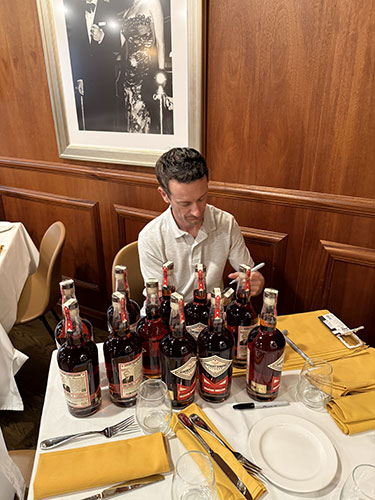
Award, personally selected the barrel of Senator Bourbon
to benefit the PDJF
The Permanently Disabled Jockeys Fund (PDJF) and Kentucky Senator Bourbon teamed up on a Single Barrel Bourbon offering to benefit fallen riders. The 140-bottle release is part of the Jim Bunning Release commemorating the legacy of the Hall of Fame Baseball player and former Kentucky Senator who worked tirelessly to advance Kentucky’s two signature industries, Bourbon and Thoroughbred racing.
“PDJF is so proud to be associated with such a fantastic premium brand as Kentucky Senator Bourbon. The founders understand Thoroughbred racing, and the risks jockeys face every time they get in the saddle, better than anyone,” said PDJF President Joe Clabes. “Their commitment to our cause is deeply appreciated by all our recipients. Great partnerships like this help us to sustain and increase the benefits we distribute each month and provide hope for those who have sacrificed so much for the sport we love.”
The barrel for this release was personally selected by jockey Julien Leparoux, PDJF President Joe Clabes, and Kentucky Senator Bourbon founders, Damon Thayer and Andre Regard. Leparoux is the winner of the 2026 George Woolf Award, which recognizes the rider selected by his peers whose career and personal character exemplify excellence in the sport of Thoroughbred horse racing. Damon Thayer is a former Kentucky State Senator and an inductee to the Kentucky Bourbon Hall of Fame for his legislative advocacy on behalf of the industry. Andre Regard, direct descendant of Bourbon pioneer Basil Hayden, carries on his family’s rich tradition.
“We are proud to be associated with the PDJF efforts to support fallen riders,” said Regard and Thayer. “We also thank our Single Barrel partners Frank & Dinos and Blinkers Tavern, and jockey Julien Leparoux for helping us select an excellent barrel of our bourbon. There are 140 bottles of this special release, and the sale of each one will benefit the PDJF.”
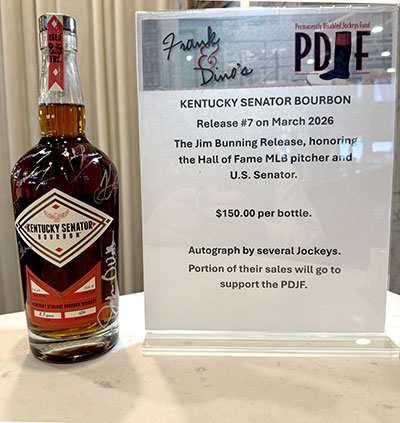
Limited Single Barrel Release
The Jim Bunning PDJF Limited Single Barrel Release is aged eight and a half years and bottled at barrel strength 126.4 proof. The mash bill consists of 75% corn, 21% rye, and 4% malted barley. The bourbon is distilled and aged in Kentucky and bottled at Bardstown Bourbon Company.
Bottles can be purchased at Frank and Dinos in Lexington and Blinkers Tavern in Covington. Kentucky Senator Spirits, LLC, Frank and Dino’s and Blinkers Tavern will be contributing a portion of their proceeds from the sales of commemorative bottles to the PDJF.
The bottles will be featured prominently and available to purchase at the 13th Annual Frank & Dino’s PDJF Fundraiser on April 20th. Tickets for this event can be purchased by contacting Frank & Dino’s before April 15th at (859) 303-4007. An additional event will be scheduled at Blinkers Tavern for a date to be determined.
About Kentucky Senator Bourbon
Kentucky Senator Bourbon is an award-winning small-batch Bourbon brand committed to crafting exceptional spirits with a side of American history. Each limited-edition release is named after a U.S. Senator and represents a blend of tradition, character, and U.S. heritage; it is distilled and aged in Kentucky for at least six years (the same length as a U.S. senate term), but often longer.
Founded by Damon Thayer and Andre Regard, Kentucky Senator revives a historic brand once produced by Crigler and Crigler in Covington and later Double Springs Distillers in Bardstown. The brand launched its first revival release in 2021 and has since become known for producing richly aged, 107-proof Bourbon expressions that connect past and present.
About PDJF
The PDJF supports former riders who have suffered life-altering injuries. With the addition of new board members, the organization is poised to strengthen its fundraising efforts, enhance outreach, and advocate more effectively for the needs of these injured athletes. For more information about the PDJF and its mission or to donate, please visit www.pdjf.org
There are more informative articles in our section on Racing & Wagering.
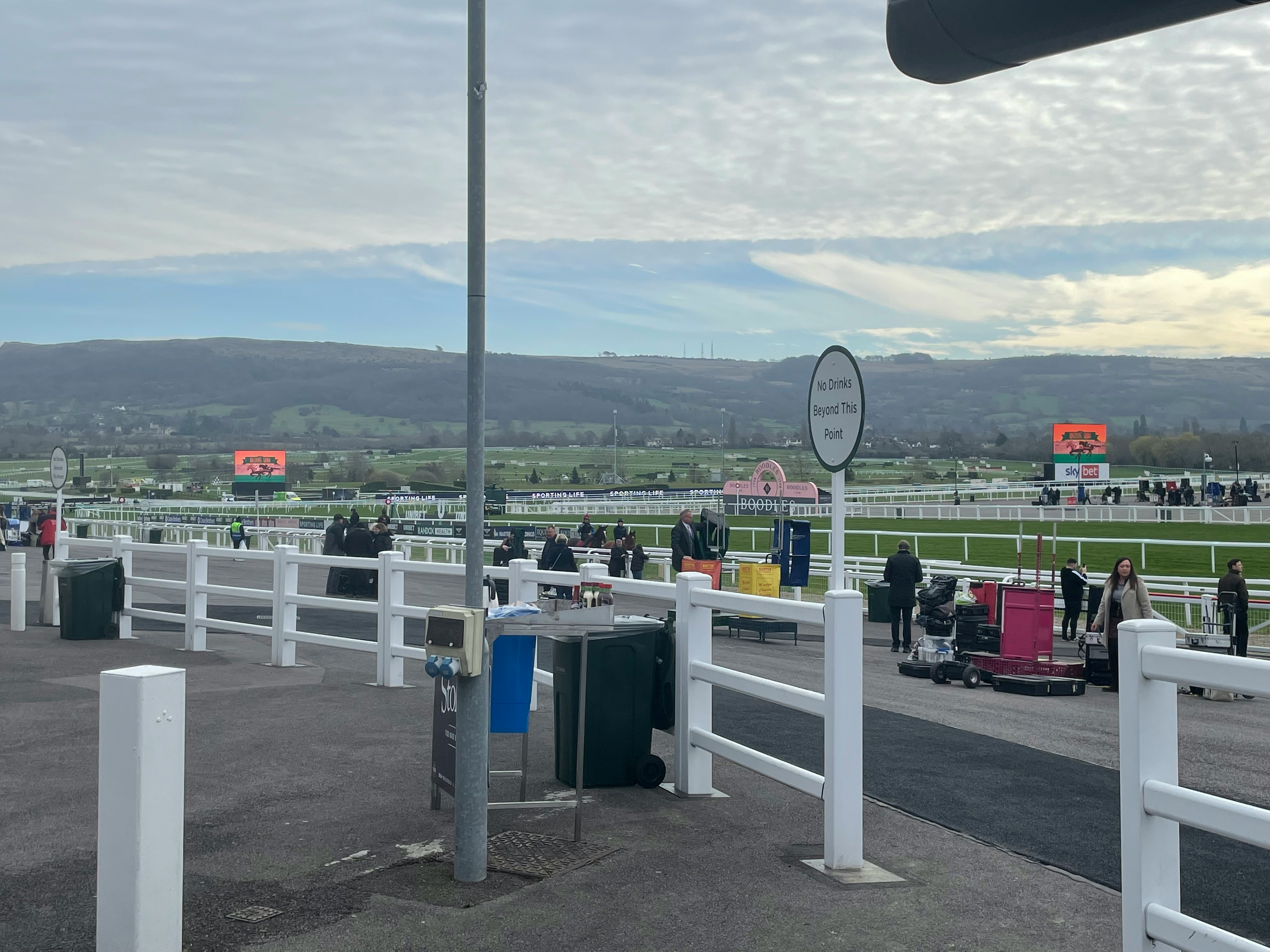
Heading into the 2026 Cheltenham Festival, superstar mare Lossiemouth had been offered the easy path to a Prestbury Park hat-trick and politely told them where to stick it. The back-to-back Mares hurdle winner instead opted for the big one, the Champion Hurdle. And she wouldn't disappoint.
As soon as the decision to race in day one's showpiece race was made, online betting sites immediately installed Rich Ricci's grey filly as the frontrunner. One can bet on horses at Bovada, and the American bookie positioned her as the clear 7/5 favorite to reign supreme. But as we saw with Constitution Hill 12 months ago, the frontrunner tag means nothing in the Champion Hurdle.
Lossiemouth's Perfect Run
Lossiemouth, wearing first-time cheekpieces, Paul Townend in the saddle, and the pair of them in perfect harmony as they rounded the last before mounting that famous charge up the hill. Six and a half lengths. Four Festival wins from four starts.
The eighth mare in Champion Hurdle history.
The cheekpieces were Townend's idea - floated one morning on the gallops after a piece of work that made Willie Mullins go quiet in that way of his. "He sees more than if people were studying videos for hours," Townend said. The headgear sharpened her focus; suddenly, the race Mullins had been mulling over looked winnable. The open division. Not the Mares'. Greatness, not comfort. Rich Ricci had a long night before Tuesday—his words—but came out the other side with his second Champion Hurdle winner, exactly ten years after the first.
Lossiemouth joins a pantheon spanning 87 years. Just eight mares. Ninety-seven runnings. Geldings have lorded over this division for decades—and yet, eight times, a mare looked at the boys, shrugged, and quickened away from them.
African Sister, 1939
The story starts on 7 March 1939, and it starts with a Piggott—though not the one you're thinking of. Keith Piggott, father of Lester, nursed African Sister home three lengths clear of Vitement in a field of 13, the clock reading 4:13.6, the crowd at Prestbury Park watching the first mare in history conquer the Champion Hurdle at 10/1. Trained by Charles Piggott, owned by Horace Brueton, she was no fluke: she returned the following year and finished second to Solford, beaten a length and a half, proof enough that her 1939 triumph wasn't just fortune smiling on a lucky day.
Dawn Run, 1984
We would have to wait 45 years for the next mare champion hurdler, and this one they would build statues for. In 1984, Jonjo O'Neill and Dawn Run—trained by Paddy Mullins, the patriarch of a dynasty—won the Champion Hurdle by three-quarters of a length from Cima. She'd matched Desert Orchid stride for stride before the hill told in her favor. She was the 4/5 favorite. She was imperious.
Two years later, she won the Gold Cup. The Champion Hurdle–Gold Cup double: unrepeated, probably unrepeatable. Peter O'Sullevan's voice cracking on commentary—"The mare is beginning to get up"—as she hauled in Wayward Lad up that brutal Cheltenham hill belongs in sport's greatest audio archive. Timeform rated her 173, the highest mark ever given to a jumping mare.
Read more: Every Mare to Win the Champion Hurdle as Lossiemouth Reigns Supreme
The atmosphere in Louisville continues to build as the first Saturday in May approaches. Fans and analysts alike are watching closely as the three-year-old field begins to take shape, with attention shifting toward those most capable of handling the demanding classic distance.
This winter’s prep races have produced a range of standout performances, from dominant front-runners setting the pace early, to late-closing challengers finishing with strength. The 2026 class appears particularly deep, featuring talent from leading barns, and final preparations are now underway as contenders position themselves for a place in the Kentucky Derby lineup.
Paladin
Paladin is currently the most discussed horse in the country. Trained by Chad Brown, this son of Gun Runner has won all three of his career starts. His victory in the Risen Star Stakes was a masterclass in professional power. He doesn't just win; he dictates the terms of the race. This maturity is rare for such a young athlete. His ability to settle behind a fast pace and explode at the top of the stretch is a huge asset. That specific trait is often rewarded in the chaotic 20-horse field at Churchill Downs.
What makes Paladin impressive is his composure across different environments. Whether he's in a quiet morning workout or under the roar of a Saturday stakes crowd, he stays calm. Fans love his "high cruising speed" which lets him stay within striking distance without wasting early energy. He remains the benchmark for the rest of the 2026 class.
Commandment
If you want raw speed, Commandment is the horse to follow. Trained by Brad Cox, this colt sent shockwaves through the community with his Fountain of Youth Stakes win. He didn't just beat a talented field. He did it while posting some of the fastest internal fractions we've seen this season. He currently holds a 103 Brisnet Speed Rating. That is the highest figure earned by any 2026 contender in a qualifier to date.
Commandment’s style relies on aggressive energy, but he's shown he can dig deep when challenged. In his last start, he turned back a fierce late charge to prove his stamina is catching up to his quickness. Since he's by Into Mischief, there were early questions about the mile and a quarter distance. His two-turn performance has silenced many of those doubts. He’s a high-octane athlete who will likely be near the lead when the gates fly open. He's a fascinating study in pure talent and physical development.
Emerging Market
Emerging Market seems to improve as the races get longer. He recently captured the Louisiana Derby, the longest domestic prep race at 1 3/16 miles. While many three-year-olds hit a wall in the final sixteenth, this Chad Brown trainee found another gear. He surged past his competition with plenty of energy left. This ability to handle a "marathon" distance is a massive benefit for anyone looking for a horse that won't fade in the deep stretch. He possesses the endurance required for the first leg of the Triple Crown.
He may not have the flashiest speed ratings, but his stamina stands out. Bred for classic distances, he has developed well over the winter for Klaravich Stables. He tends to stay out of trouble, settling mid-pack before making his move. If the Derby pace is fast, Emerging Market has the profile of a closer who can take advantage. With 100 points, he has already secured his place in the starting gate.
Fulleffort
Fulleffort has taken a unique path to the top of the leaderboard. He's done his best work on synthetic surfaces recently. His win in the Jeff Ruby Steaks at Turfway Park was a lesson in patient riding. He rallied from the back of the pack to secure a dominant victory. That win earned him 100 qualifying points. It vaulted him to a total of 110. This officially guarantees his position in the Kentucky Derby lineup. He's a horse with a massive heart who keeps improving every month.
The big question involves the transition to traditional dirt. He hasn't raced on dirt yet this year, but his morning breezes suggest he handles it well. He has an efficient way of moving that saves energy. This is crucial for a horse that likes to come from behind. With his spot in the starting gate secured, his team can focus on the Louisville atmosphere without point pressure. He's a dangerous horse that people might overlook because of his background. He represents the peak of consistency for the Brad Cox barn.
Nearly
Nearly is the latest powerhouse to emerge from the Todd Pletcher stable. After a convincing Holy Bull Stakes win, he's a favorite for those who value physical presence. He’s a large colt who seems to intimidate rivals just by stepping onto the track. Pletcher has been methodical with his training to ensure Nearly peaks at the right moment. He hasn't left his best race in the early spring. He looks seasoned and ready for the biggest stage in the sport.
What makes Nearly interesting is his versatility. He's shown he can win on the lead or come from off the pace. This gives his jockey plenty of options depending on the race flow. His pedigree is filled with stamina. His recent workouts show a horse that is becoming more focused with every trip. He represents the classic Pletcher mold of a horse that is durable and well-coached. He is a reliable choice for anyone wanting a contender with a high ceiling. He currently has 20 points and needs a strong Florida Derby finish.
The Road to the Winner’s Circle
The Road to the Kentucky Derby is never a straight line. Watching these athletes develop from raw two-year-olds into battle-tested contenders is what makes our sport unique. As we head into the final weeks of preparation, the excitement will grow for the whole community. It’s about the anticipation of that one afternoon when everything has to go right.
The 152nd Run for the Roses promises to be an unforgettable chapter in history. Whether you root for a favorite or a long shot with heart, the experience is something to cherish. Let's enjoy these final moments of the trail and get ready for a spectacular afternoon.
There are more interesting articles in our section on Racing & Wagering.
- Understanding Virginia Derby Odds: Key Colonial Downs Factors to Consider
- Cheltenham's Indispensable Role In Propping Up The Health Of UK Horse Racing
- Gotham Stakes 2026 Betting Guide: What to Know About Aqueduct
- Galopin Des Champ Set for Cheltenham Gold Cup Hat-Trick Bid
- Dubai World Cup Set for Stellar Renewal In 2026
- How to Read the Horse Racing Market
- Who Will Win 2026's Champion Hurdle at Cheltenham?
- Curiosities about Horse Racing that Reveal Another Side of the Sport
- Understanding horse racing odds for enthusiasts
- Most Impressive Race Horses of 2025