




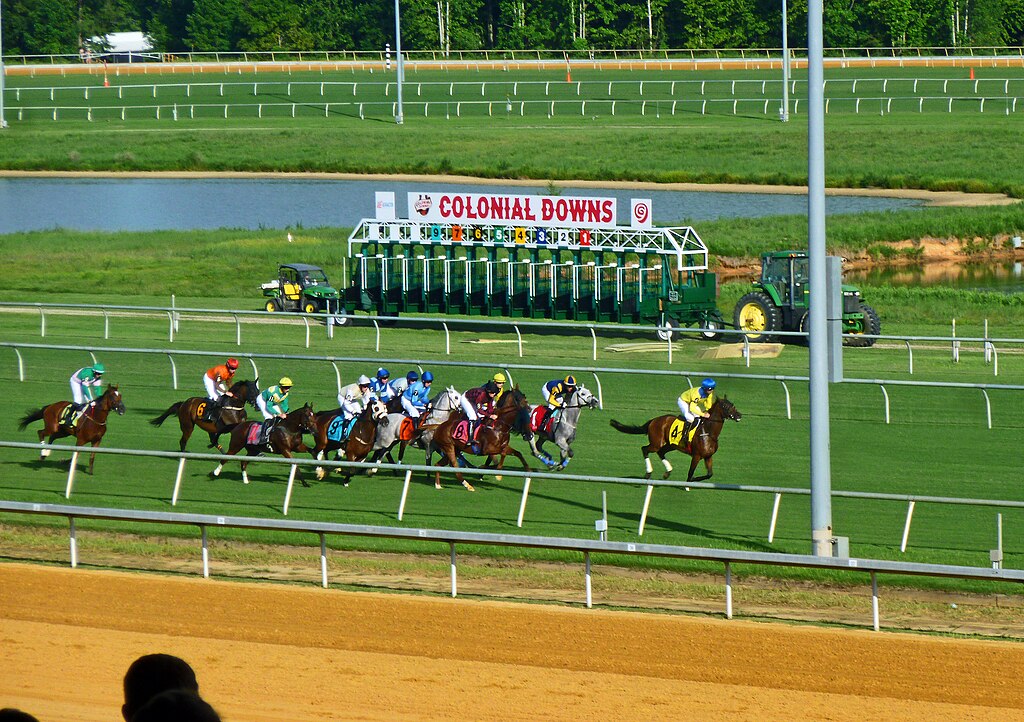
Understanding Virginia Derby odds starts with understanding Colonial Downs itself. This modern venue in New Kent County sits between Richmond and Williamsburg, and it races differently from many familiar circuits.
The Derby is contested on Colonial Downs’ wide dirt track, a configuration that shapes trip dynamics and directly impacts how the betting market prices running styles.
Odds move fast when a field ships in from Florida, New York, or Kentucky and has to deal with a track that feels wide and sweeping. A clearer read comes from focusing on a few Colonial-specific factors that repeat every spring. Track geometry, pace pressure, post position, and local weather patterns leave fingerprints on the tote board and on how the race is run.
Start With the Colonial Downs Layout
Colonial Downs features a wide dirt oval that measures one and one-quarter miles around, with long turns and a long run into the stretch. That geometry often rewards horses that stay in rhythm rather than those that need sharp accelerations. It also affects how riders judge when to commit, due to the fact that sweeping turns can hide momentum changes.
The Virginia Derby distance is run over one and one-eighth miles, so the field has time to settle after the break. Still, the first bend arrives quickly enough that posts matter, especially for horses that need to position themselves quickly. When the pace looks honest, a rider can gain ground early and let the big track do the work late.
For a quick snapshot of the market, Virginia Derby odds at Colonial Downs offer a solid starting point. Pair those prices with an analysis of the track layout, and the picture sharpens right away.
Read the Pace Through a Colonial Lens
Colonial Downs can produce clean, orderly races because the turns are generous and the lanes are wide. That often encourages riders to stay patient, which can moderate early pace battles compared with tighter ovals. When several speed horses line up, the race hinges on whether they force a demanding early pace or sort themselves into controlled positions that leave something in reserve for the stretch.
Past performances can be an indicator of potential success, but the key is comparing pace figures posted on different tracks. A horse that controlled tempo at a one-mile track may face a different first half mile when the field stretches out on Colonial dirt. Watch for horses that showed the ability to sit second or third and still finish, because that skill translates here.
Also note the trainer's intent. Some barns treat this race as a primary target and bring fitness and speed, while others arrive off longer gaps. That context influences how aggressive a ride will be.
Posts, Trips, and the Value of Ground
At 1 1/8 miles, stamina often trumps raw speed. Colonial Downs' wide layout lets horses recover from bumps or traffic trouble, but ground loss still accumulates over the two turns.
Wider posts can force a decision early. Either use energy to clear, or take back and risk getting parked behind slower horses. Inside draws bring their own choices. A horse with tactical speed can hold a rail spot and save ground, but a deep closer can get shuffled if the pace slows. Handicappers can map likely paths by matching running styles to posts, then imagining the first five furlongs rather than the final quarter.
Pay attention to jockeys who are familiar with Colonial. Local experience helps with timing, especially when the surface plays a touch tighter or looser than expected. Riders who wait too long can run out of real estate on a track where momentum builds gradually.
Weather Track Maintenance and Surface Clues
Spring in Virginia brings quick shifts in temperature and rain, and Colonial Downs can change character with moisture. A drying surface may tighten and favor forward placement, while a deeper track can make sustained runs more effective. Because the Derby anchors a spring meet, maintenance patterns can differ from the summer turf season. Watching early races on the card can reveal whether the track favors inside paths, outside lanes, or a particular running style.
Look for details that casual bettors miss. Are horses kicking back heavy dirt, or is the surface throwing a light spray? Are riders angling away from the rail, or hugging it? Small visual cues often signal how the crew has graded and sealed the track.
Also consider shipping. Horses arriving from circuits with different soil and climates can react to the footing. A solid workout over the surface, when available, can hint at comfort and confidence before race day.
Class Signals and How to Compare Form
The Virginia Derby draws three-year-olds from many regions, so class handicapping matters as much as speed. Compare fields, not just final times. A fast figure earned against underwhelming company can look attractive, but it may not translate when the horse meets deeper opponents with proven stamina.
Use a simple checklist. Confirm that the horse handled two turns on dirt. Confirm that it finished strongly past a mile. Then look at the quality of rivals in prior starts and how the horse responded when challenged. Horses that kept finding more in the lane often hold form when they step up.
Trainer patterns add another layer. Some trainers excel when stretching a horse from a mile to nine furlongs, and others show strong records with shippers in Mid Atlantic stakes. When the barn brings a horse in early and works steadily, it often signals intent and readiness.
Read the Board Like a Colonial Regular
To sharpen your view of Virginia Derby odds, focus first on Colonial Downs' key factors. Start with the dirt oval: visualize how the first turn dictates early position. Build a pace scenario tailored to the track, layering in post positions and probable trips. Cross-check the surface via early races, factoring in that week's weather, moisture, and maintenance can dramatically alter the dirt's feel.
Finish by practically comparing the class. Two-turn dirt stamina and proven response to pressure matter more than a single flashy number. When these snippets of information align, the tote board becomes easier to interpret, and movement makes sense.
There are more interesting articles in our section on Racing & Wagering.