




Health & Education
We all want the best care possible for our horses. The Heath & Education section covers both Learning Institutions, Organizations as well as many sources for equine assistance including Veterinarians and Farriers.
For those who want a to formally study horses, the Education section includes College Riding, Equine Studies, and Veterinary Schools. Learn about the wide variety of horses in the Horse Breeds section. Supplements and Treatments Therapy are also included in the section.
Everyone can learn from Fine Art and there are some specialty Museums that might surprise you.
Horses as a therapy partner enrich the lives of the disabled. These facilities are listed in our Therapeutic Riding section. To help children and young adults build confidence and grow emotionally, please see the resources available on the Youth Outreach page.
Looking for a place to keep your horse? You can find it in the Horse Boarding section. Traveling? Find a Shipping company or Horse Sitting service if your horse is staying home!
Want to stay up to date with the latest training clinics or professional conferences? Take a look at our Calendar of Events for Health & Education for the dates and locations of upcoming events.
Do we need to add more? Please use the useful feedback link and let us know!
Brought to you by With Purpose: The Balmoral Standard
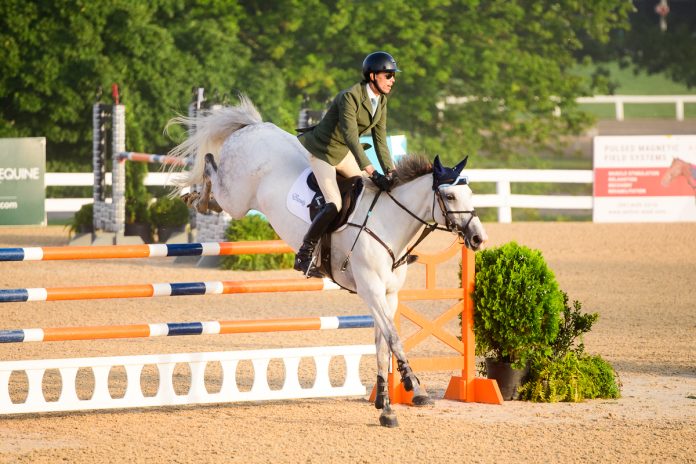
When most riders picture a gymnastic line, they think of building height as they go. Start small, get the horse organized, and finish with the biggest effort. At Balmoral, however, Carleton and Traci Brooks often flip this expectation. Instead of finishing on a high oxer, they sometimes end with the smallest jump in the line. Why? Because not every horse benefits from ending on a higher jump.
Rethinking the Traditional Gymnastic
Traditional gymnastics are designed to build confidence, strength, and technique. A classic line might begin with a crossrail, then an oxer, then a vertical that gradually gets taller. By the end, the horse is meant to feel successful at a greater height and effort.
But what about the horse that builds too much? The hot one who gets quick through the line, or the green horse who begins to worry? For these horses, finishing big can create anxiety instead of confidence. That’s where descending gymnastics, ending with the lowest fence, come in.
Who Benefits Most
Descending gymnastics are particularly useful for:
- Hot Horses: The kind that rush down lines, throwing their rider onto the defensive.
- Young Horses: Those still learning the ropes, who need to end on a calm, positive note.
- Tense Horses: The ones who start anticipating, bouncing through the line with more adrenaline than rhythm.
- By finishing with a small fence, these horses settle down, take a breath, and learn that not every line ends with maximum effort.
Building the Line
A typical descending gymnastic might start with a crossrail, build to a small vertical or oxer in the middle, and then drop back down to a crossrail at the end. The line still serves its purpose, teaching straightness, encouraging bascule, and keeping the rider focused, but the finish is soft.
This kind of exercise tells the horse: you don’t need to escalate every time. It conditions them to stay rideable and quiet, rather than anticipating a big finish.
What Riders Learn
Descending gymnastics aren’t just for the horse’s benefit. They also teach riders valuable lessons:
- Resist the Urge to Chase: Riders often push harder as jumps get bigger. Ending small reinforces patience.
- Ride the Rhythm, Not the Height: With the last fence tiny, the focus shifts to pace and track instead of “surviving” the finish.
- Learn to Relax, Too: Just as the horse takes a breath at the end, the rider practices letting go of tension.
Avoiding the Trap of Bigger = Better
It’s easy to assume progress means raising fences higher and higher. But Balmoral’s philosophy reminds us that not all horses, or riders, thrive under that model. Sometimes, progress looks like stepping down, using thoughtful exercises to teach relaxation instead of escalation.
In the Show Ring
A horse that’s trained with descending gymnastics often shows a noticeable difference in the ring. Instead of charging the last element of a combination, they stay soft through the finish. Instead of expecting every question to get harder, they stay open to listening. That difference can be the margin between a rushed, tense round and a polished, winning trip.
Not every gymnastic needs to build to a grand finale. By finishing small, riders can teach their horses to stay calm, confident, and consistent. And in the long run, that foundation of rideability will carry far more value than one big jump at the end of a line.
Want to take your riding and horsemanship to the next level? With Purpose: The Balmoral Standard distills decades of wisdom from Carleton and Traci Brooks into practical, thoughtful lessons you can apply every day at home, in the schooling ring, and in the show ring. From training philosophies to mental game strategies, the book offers riders of every level a blueprint for success built on empathy, structure, and purpose.
With Purpose: The Balmoral Standard is available on Kindle and Audible.
This article originally appeared in The Plaid Horse Magazine and is published here with permission.
There are more informative articles in our section on Health & Education.
by Kentucky Equine Research Staff
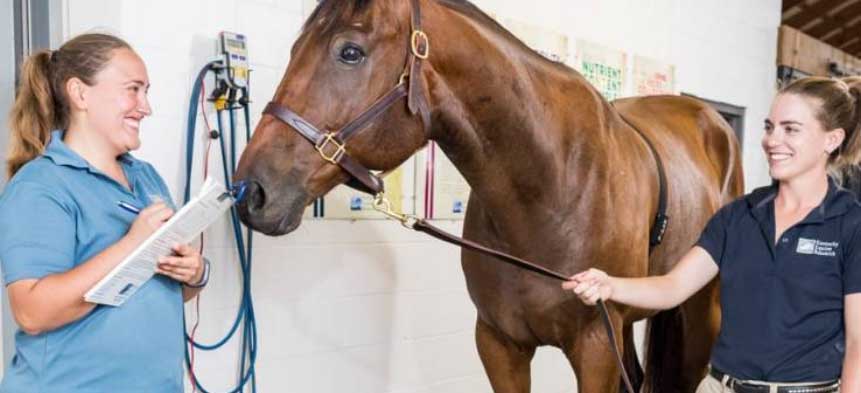
Ohio has one of the largest horse populations in the United States, with close to a quarter million horses. A recent survey of Ohio horse owners and enthusiasts gathered data on current management practices, with the goal of identifying research and educational opportunities to enhance equine welfare. In this article, Kentucky Equine Research nutritionist Ashley Fowler, Ph.D., addresses some of the survey findings related to nutrition, offering practical insights to help horse owners improve the health and well-being of their animals.
General Information
A total of 1,422 Ohio residents responded to the 52-question survey, the majority of whom were horse owners. Respondents reported owning a wide variety of breeds, with Quarter Horses being the most common (29%), followed by Thoroughbreds (9%), Paints (8%), Warmbloods (7%), and Miniature Horses (7%). Most horses (21%) were between six and ten years of age.
In terms of housing, 32% were group-housed on pasture, 31% were stalled with unlimited turnout, and 13% were either stalled full-time or had limited turnout. Despite this, horses typically had access to grazeable pasture for only about six months of the year.
Additionally, 27% of horses were classified as “at maintenance,” receiving only voluntary exercise.
Feeding Hay and Concentrates
Most survey respondents (96%) reported offering concentrates that were fed either by weight or visual estimation. The primary reason owners fed concentrates was to “meet nutrition requirements not met by forage alone,” such as vitamin, mineral, and protein needs, as well as energy requirements.
“As the researchers discussed, a limitation of this question is that horse owners were not asked to specify what kind of concentrate they fed. Ration balancers, complete feeds, and other commercial concentrates are fed for different reasons,” explained Fowler.
The reasoning for feeding a concentrate is sound, according to her, as forage rarely provides all the required nutrients. Ration balancers provide important vitamins, minerals, and high-quality protein and are appropriate for horses that do not need additional calories, such as horses in light work or easy keepers. More energy-dense concentrates help provide additional calories beyond what forage can provide, in addition to filling gaps in minerals, vitamins, and amino acids.
Forage was primarily fed by flakes, bales, or “armfuls” rather than by weight.
Read more: Horse Management Survey Results: A Nutritionist’s Perspective
- Six Key Questions About Platelet-Rich Plasma for Horses
- Potomac Horse Fever
- Drinking Behavior of Horses: Six Facts About Water Intake
- Protein and Muscle Recovery for Performance Horses - an excerpt from Helping All Horses Live Healthier Lives
- Evaluating Horses for Back Pain
- Is Pasture Grazing Safe This Summer for Your Insulin-Resistant Horse
- Chewing Halters: A New Tool to Track Ingestive Behavior and Optimize Welfare
- Barn Construction: 7 Principles to Reduce Fire Risk
- Top 3 Causes of Barn Fires
- Rope Halter Safety and Adjustment with Julie Goodnight
- Crafting Diets for Easy and Hard Keeper Horses - an excerpt from Helping All Horses Live Healthier Lives
- How Horse Show Culture Has Changed (and why it’s worth preserving)
- Listening Beyond Words: The Wisdom of Horses
- More than ‘Four on the Floor’ with Equine Guelph Horse Trailer Safety Course
- Skin Problems in Horses: Culicoides Hypersensitivity
- Osteoarthritis Pain in Horses Controlled by CBD and Related Products
- Review of Roaring & Possible New Surgical Procedure
- Encourage Horses to Drink During Transport
- Be Pro-active Rather than Reactive with Biosecurity
- Is Your Horse Happy?