





Recreation & Lifestyle
Welcome to Recreation & Lifestyle, which includes leisure riding and other aspects of the equestrian lifestyle for you and your horse loving friends and family.
Looking for the perfect present? See the Gifts & Jewelry section. Redecorating? Find a Painting, Photograph or Sculpture in the Artwork section. Need to check out a movie or crawl up with a good book or magazine? See our Entertainment section where you will find and Books, Movies, Games, and Magazines. And don't forget about Fine Art in some specialty Museums that might surprise you.
Looking for love or a trail buddy? Riding Partners is the spot to seek other riders who share your passion. Find a place to ride with that special person in our Trail Riding section and if you need more time away, take a look at Vacations. Want to know about the next horse show or special event? Don’t miss it! Dates and locations are included in the Calendar of Events for Recreation & Lifestyle.
Do we need to add more? Please use the useful feedback link and let us know!
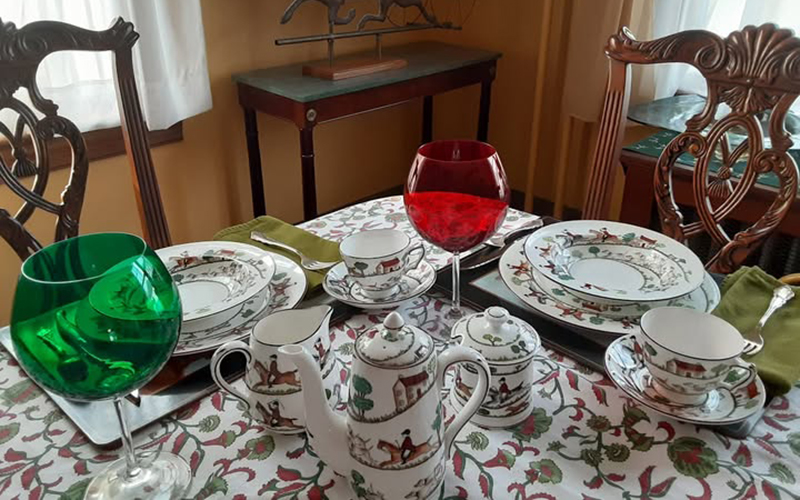
Popular equestrian china and porcelain patterns often feature motifs such as snaffle bits, fox hunting scenes, and horses in motion. Top, highly regarded patterns include Hermès Tressages Equestres, Wedgwood Hunting Scene, and Julie Wear's "Cheval.”
Here are some of the most popular and recognized equestrian china patterns based on market presence
Top Luxury & Contemporary Brands
- Hermès: Their renowned, luxurious pattern "Cheval D’Orient" featuring scenes of horses with Persian-inspired, vibrant designs. The "Tressage Equestres" is a high-end, artistic collection featuring intricate braided patterns inspired by harnesses and passementeries.
- Julie Wear Designs: Known for the "Cheval" pattern (snaffle bit theme) and the "Bluegrass Equestrian" collection.
- Vagabond House: Features the "Wellington Bit" collection in fine bone china, which often includes equestrian-themed, hand-drawn detailing.
- Ralph Lauren: Known for the "Equestrian Braid" series and other tableware, including platinum and stainless options.
Read more: Time to Set a Beautiful Table! A Look at Equestrian China
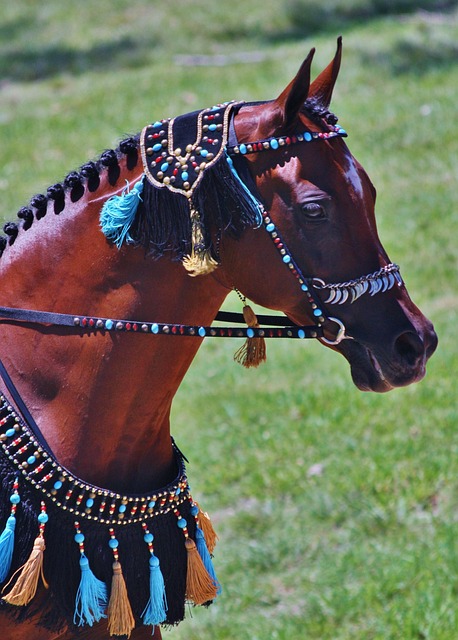
Conflicts in the Middle East have led to widespread cancellations of elite competitions, significant logistical disruptions for international participants, and severe welfare crises for local horse populations. These countries include Iran, Israel, Iraq, Syria, Lebanon, Yemen, Saudi Arabia, United Arab Emirates, Qatar, Kuwait, Bahrain, Oman, and Jordan.
Cancellations of Elite Competitions
Recent escalations in March 2026 have forced the Fédération Équestre Internationale (FEI) to suspend several high-profile events due to security concerns:
- Longines Global Champions Tour (Doha): The five-star CSI event scheduled for March 4–7, 2026, at Al Shaqab was cancelled due to airspace restrictions and travel limitations.
- UAE Events: Competitions including the two-star CSI in Abu Dhabi and a CSI2* show in Al Ain were cancelled in early March 2026.
- Dubai World Cup: The $12 million race, scheduled for March 28, 2026, is currently in a "wait-and-see" status as owners and trainers monitor airstrikes and transport risks.
Logistical and Participant Impact
- Stranded Personnel: Dozens of international jockeys and trainers became stranded in the Gulf region after Iranian attacks led to the closure of Dubai International Airport and other major airspace.
- Transport Disruptions: International horse shipments, including those from Europe to Qatar and Australia to the Middle East, have been rerouted or grounded. In some cases, planes carrying grooms were forced to turn around mid-flight.
Read more: Horses in War: How Current Conflicts Impact Equestrian Events
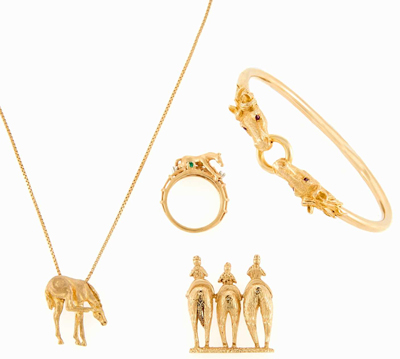
Buying gold and silver equestrian jewelry can be a solid, wearable investment, particularly for long-term value retention, acting as a hedge against inflation. Gold offers superior stability and higher resale value, while silver provides a more affordable, durable entry point. It acts as a "passion investment" combining aesthetic, personal, or equestrian interests with tangible, intrinsic value.
Why Gold and Silver Equestrian Jewelry Can Be a Good Investment
- Intrinsic Value & Inflation Hedge: Precious metals like gold and silver have historically maintained their worth and served as protection against economic downturns and inflation.
- Wearable Asset: Unlike coins or bars, jewelry can be enjoyed daily, making it a "passion investment" that serves a functional purpose while holding value.
- Long-Term Durability: High-quality gold and sterling silver jewelry are designed to last for generations, often becoming valuable family heirlooms.
- Portfolio Diversification: Adding physical precious metals to a portfolio can reduce overall risk due to their stability.
Read more: Investment and Enjoyment: Is it a Good Time to Buy Equestrian Jewelry?
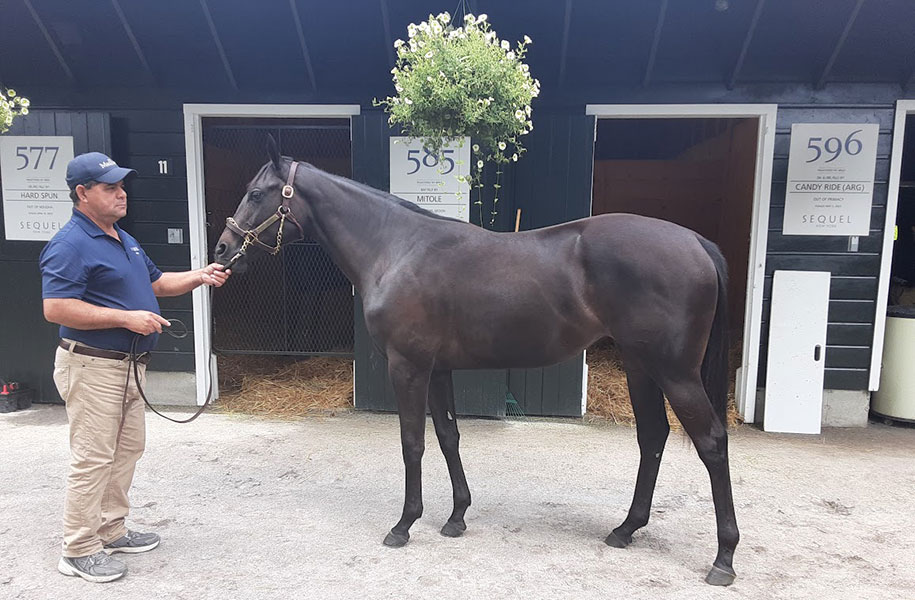
Key Tax Benefits for Horse Racing
The One Big Beautiful Bill Act (OBBBA) of 2025, signed by President Trump, revitalized the horse racing industry by permanently reinstating 100% bonus depreciation for investments in racehorses. This allows owners to immediately deduct the full cost of purchasing horses and breeding stock in the first year, causing a record-breaking influx of capital into the market, such as a $531.5 million Keeneland September 2025 Yearling Sale.
- 100% Bonus Depreciation: Owners can write off 100% of the cost of a racehorse, breeding stock, qualifying property or equipment (like barns and tractors) in the year they are "placed in service". Previously, this rate had dropped to 40% in 2025 and was scheduled to hit 0% by 2027.
- Expansion of "New" Assets: The definition of eligible property was expanded to include used horses, such as broodmares or stallions purchased after they have already started racing, provided the buyer has not owned the horse previously.
- Loss Offsets: Owners can deduct horse-related losses against other types of income, including salaries and capital gains, which acts as a "partner" for investors in a high-risk industry.
- Permanent Three-Year Depreciation: Separate legislation, the Race Horse Cost Recovery Act of 2025, permanently established a three-year depreciation schedule for all racehorses regardless of age, providing an alternative for those who do not use immediate expensing.
Market Impact and Records
These incentives have driven record-breaking results at major thoroughbred auctions:
- Keeneland September Yearling Sale (2025): Grossed an all-time record of $531.5 million, with 56 horses selling for at least $1 million.
- Fasig-Tipton (2025): The November sale saw $245.9 million in transactions, the highest-grossing since 2007.
- Increased Asset Values: The tax breaks have turned racehorses into a "hot investment" for the ultra-wealthy, with top-tier colts selling for $3 million to $4 million even when they have minor physical flaws.
Important Limitations
To claim these benefits, owners must meet specific IRS requirements:
- Business vs. Hobby: Owners must prove the activity is a for-profit business rather than a hobby. The IRS generally presumes a business motive if the operation shows a profit in at least 2 out of 7 consecutive years. (Note: Please consult and verify this with your accountant who is familiar with the tax laws for an equine business such as Len Green.)
- Reporting Thresholds: Starting in 2026, the threshold for issuing a Form 1099 to vendors (like blacksmiths or contractors) increases from $600 to $2,000, reducing administrative burdens for smaller farms.
- Wagering Losses: While owners gained significant breaks, bettors saw a slight reduction, with wagering loss deductions now limited to 90% of losses compared to the previous 100%.
Did this tax act benefit you? We’d like to hear how. Email us at info@equineinfoexchange.com
You can find more informative articles in our section on Recreation & Lifestyle. Take a look at our Curated Amazon Store for our selections in a wide variety of categories!
Are you interested in promoting your business or sharing content on EIE? Contact us at info@equineinfoexchange.com
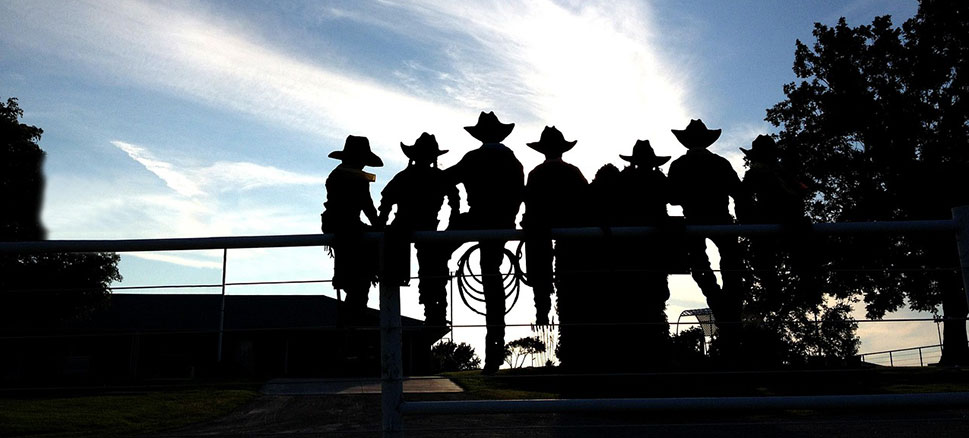
In February 2026, Marco Rubio and Alexandria Ocasio-Cortez sparked a public debate regarding the historical origins of the American cowboy. Their competing views highlight different aspects of how the cowboy tradition arrived and evolved in the United States.
Marco Rubio's Argument: The Spanish Roots
During a speech at the February 2026 Munich Security Conference, Secretary of State Marco Rubio stated that the "entire romance of the cowboy archetype" was born in Spain .
Spanish Foundations: Historically, Spanish settlers reintroduced horses and cattle to the Americas in the 1500s.
Ranching Systems: The American ranching model traces back to the medieval Spanish hacienda system, which utilized open-range grazing and mounted herders.
Terminology: Even the word "cowboy" is a direct translation of the Spanish word vaquero (from vaca, meaning cow).
Alexandria Ocasio-Cortez's Argument: Mexican and African Contributions
Rep. Ocasio-Cortez (AOC) mocked Rubio's claim, asserting that Mexicans and descendants of enslaved African peoples were the true architects of the cowboy tradition.
Mexican Vaqueros: While Spain provided the livestock and basic tools, it was the Mexican vaqueros (Indigenous and Mestizo horsemen) who developed the specific roping techniques, gear (like lassos and western saddles), and survival skills that defined the American West.
African Influence: Historians note that approximately one in four cowboys during the 19th-century cattle drives were Black. Some research suggests certain herding techniques may also have roots in West African cultures.
Native American Impact: Groups like the Comanche, Cheyenne, and Apache also contributed as "unrivaled horse whisperers" who adapted Spanish horses to the North American landscape.
Historical Consensus
Experts generally agree that both perspectives are correct but incomplete on their own. The American cowboy is a multicultural evolution.
- Spain provided the essential ingredients (horses, cattle, and the concept of mounted herding).
- Mexico refined these into the distinct vaquero culture.
- Black and Indigenous workers in the U.S. South and West integrated these traditions into the iconic American "cowboy" figure of the late 1800s.
What are your thoughts? Let us know at info@equineinfoexchange.com You can also learn more about Western Riding on EIE.
You can find more informative articles in our section on Recreation & Lifestyle. Take a look at our Curated Amazon Store for our selections in a wide variety of categories!
Are you interested in promoting your business or sharing content on EIE? Contact us at info@equineinfoexchange.com
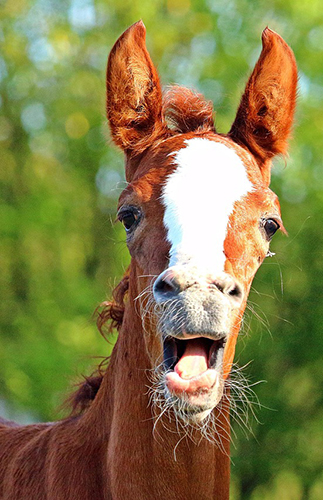
Naming a horse is an important part of horse ownership. It is a reflection on personal taste and perhaps the looks, personality and heritage of the horse. The best way to pick a horse name is to combine personal inspiration—such as personality, color, or lineage—with practical considerations like ease of pronunciation and uniqueness. Many owners choose short, memorable, and distinct names to avoid confusion with other horses in the barn.
Top Strategies for Naming a Horse
Personality & Appearance: Observe the horse for a few days. Names often reflect personality (e.g., "Spirit"), appearance (e.g., "Spot," "Shadow"), or behavior.
Pedigree & Heritage: Use the dam (mother) or sire (father) names for inspiration, or combine them to create a new, unique name.
Themes & Hobbies: Choose names based on mythology, nature, favorite characters, or personal passions (e.g., "Zeus," "Willow").
Pairing (for Multiple Horses): If you have two, consider complementary, but distinct, names like "Maggie" and "Murphy," ensuring they do not sound too similar to avoid confusion.
Practical Tips
Keep it Simple: Short, one-to-two syllable names are easiest for training and communication.
Check Availability: If registering the horse, check breed registry databases such as the AQHA and The Jockey Club for similar, existing names. The Jockey Club even has an AI naming tool.
Test it Out: Say the name loudly, as if calling the horse in a field, to see if it feels right.
Important Rules to Remember
Length Constraints: Registered names often have character limits (e.g., maximum 18–35 characters).
No Obscenity: Names must not be vulgar or offensive, nor can they be famous commercial, brand, or, in some cases, human names.
No Duplicates: The name must be unique and not conflict with existing, registered, or famous horses.
These tips are points to consider and have fun naming your horse!
You can find more informative articles in our section on Health & Education. Take a look at our Curated Amazon Store for our selections in a wide variety of categories!
Are you interested in promoting your business or sharing content on EIE? Contact us at info@equineinfoexchange.com
- New Year’s Resolutions for Horse People
- Winter Blues? How Horses can Help Us
- Should I Stay or Should I Go? Finding a New Barn for Your Horse.
- Need Spanish at the Barn? Some Helpful Words in Espanol!
- A Horse Barn – The Great Escape
- The Drama Free Barn. Is it Possible?
- Dogs and Horses. Which are the Best Dog Breeds to Bring to the Barn?
- Equestrian Living in Spain: Where Heritage Meets Harmony
- Feel Like the Worst Rider at the Barn? Some Suggestions to Help!
- A Wonderful Weekend at Equine Affaire 2025 in West Springfield, MA