




Retire & Rehome
Whichever way we ride or however we are associated with horses, we can all agree that horse welfare and rescue is extremely important. Learn about these caring places in our Rehome section, where money and time can be donated to help horses find, or remain, in their forever home.
Many charity events help fund the good work of equine rescue organizations. Parties and auctions to benefit rescue are included in the Calendar of Events for Retire & Rehome.
Have an old friend to retire? Find a place where your horse can live the life of leisure in our Retirement section.
Do we need to add an event or rescue? Please use the useful feedback link and let us know!
by Melissa Bauer-Herzog
Are you thinking about buying an Off-track Thoroughbred (OTTB) but concerned after learning about various racetrack injuries? While hearing about many of the injuries can be scary, most won’t restrict your mount from helping you achieve your goals.
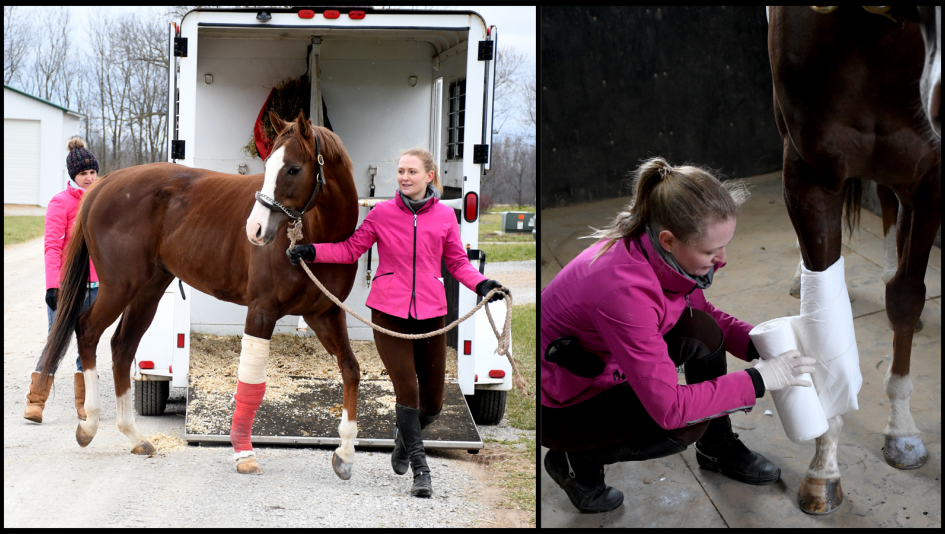
In order to shed some light on how even a severe injury can be rehabilitated to allow a former racehorse to succeed in a new career, we’ve teamed up with New Vocations to follow a horse from rehabilitation intake to adoption.
Over the coming months, we’ll see what a normal rehabilitation process looks like for a horse recovering from a surgery to remove a bone chip and screw.
But first … a little background on New Vocations.
Read more: The Rehabilitation Process at New Vocations: Meet London House
by Melissa Bauer-Herzog
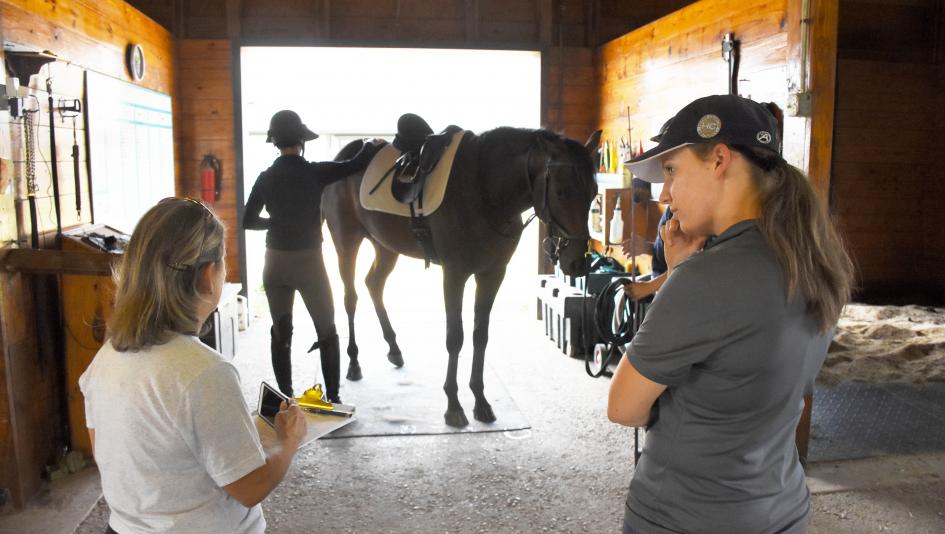
When applying for Thoroughbred Aftercare Alliance (TAA) accreditation, it isn’t as easy as just filling out an application and receiving money. Each operation applying for accreditation must go through an inspection of every property it uses with many accredited organizations admitting the process isn’t a walk in the park but that it is needed.
“I think it’s crucial. It’s very, very hard,” said Susanna Thomas of the TAA-accredited Maker’s Mark Secretariat Center. “They are very thorough, and their process is well thought out, well executed; that makes it very hard. I welcome that and I applaud that because people donate their precious dollars and they need to know that if an organization is TAA accredited that their dollars are being well spent. Let me tell you, the TAA makes sure that you spend your dollars well, they are very good at that and they are really tough. It means something to be TAA accredited and I am so grateful for that.”
Read more: Thoroughbred Aftercare Alliance Accreditation an Involved Process
by Melissa Bauer-Herzog
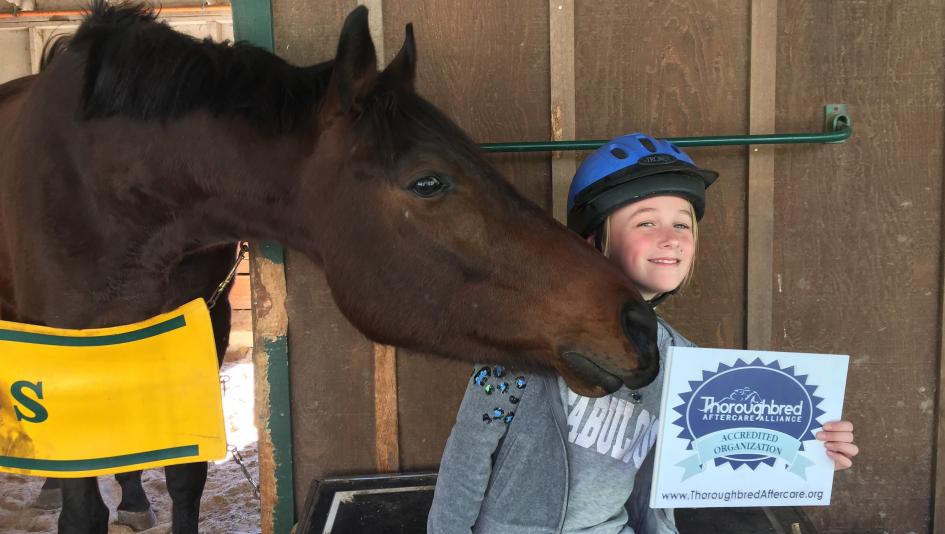
With the Thoroughbred Aftercare Alliance’s (TAA) funding for aftercare organizations rising from $1 million in 2012 to $3.42 million in 2019, it is safe to say the organization has grown in the near-decade since its inception. Its growth and contribution saw it win a special Eclipse Award in 2014 and Special Award of Merit at this year’s Preakness Alibi Breakfast but TAA President Mike Meuser says there is still work to be done.
Originally accrediting 21 organizations, the class of 2019 includes 74 aftercare organization with its accredited organizations helping over 10,300 Thoroughbreds since 2012. TAA is entrenched in the Thoroughbred sales and breeding sectors now through both mandatory and voluntary donations and Meuser says 2020 is about trying to bring in parts of the industry they haven’t focused on before.
Read more: Thoroughbred Aftercare Alliance Continues to Expand Reach
by Melissa Bauer-Herzog
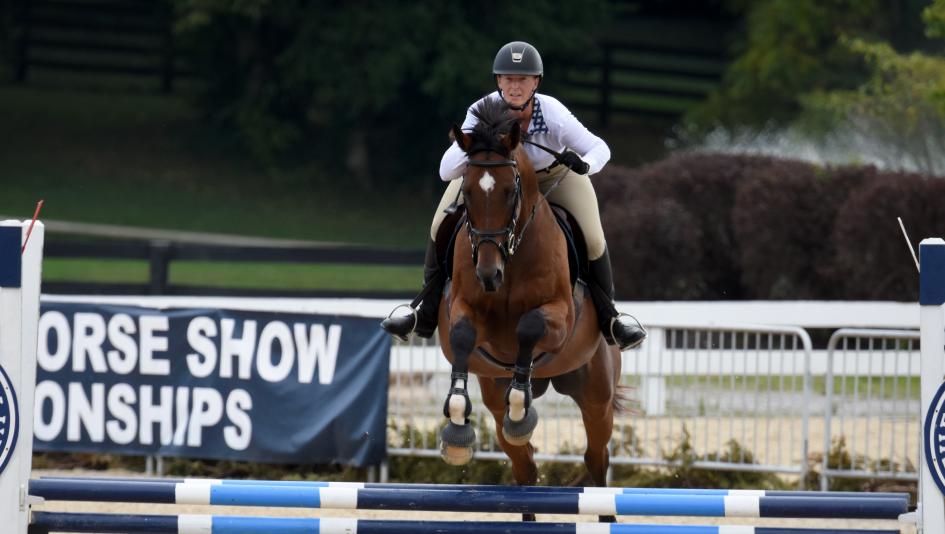
After seeing all the videos of people getting new horses this holiday season, you’ve decided it’s the perfect time to get an off-track Thoroughbred (OTTB). You’ve visited the track often and tune in to the races on television so getting a retiring racehorse seems like the natural first step.
However, before you jump in with both feet, there are some things to consider when bringing a former racehorse to the family. We’ve talked to some big names in aftercare to get their opinion on 12 things you need to consider before taking a new horse home.
1. “When getting a horse off the track you have to remember these horses are going to transition and go through phases. They are serious athletes that are used to one job and one specific schedule every single day. It takes time to acclimate away from that and transition into the life of more of a pet/hobby on a more relaxed schedule. Life off track is without a doubt less stressful but when it's the only thing you’ve known your whole life it is actually the exact opposite, so to make their transition less stressful keeping a set routine will really help them adjust.” - Amy Paulus, Changing Saddles LLC
Read more: Twelve Things to Remember When Bringing Home an OTTB
by Natalie Voss
Depending on the day, working in Thoroughbred aftercare can feel especially impactful or incredibly futile. On one hand, horse racing has accomplished so much in a short amount of time in its quest to take care of Thoroughbreds leaving the track. On the other, there's still a long way to go.
In the face of funding shortages, the complex legal, logistical, and ethical issues of the horse slaughter pipeline, and a mass influx of horses in need, what can the industry do better?
The intangible efforts
John Phillips, president of the Thoroughbred Aftercare Alliance (TAA), said the first step is to define the problem. For one thing, we need better data to understand how many Thoroughbreds find themselves in need, including the number in the slaughter pipeline.
“I think historically this is one of the areas that has provided reluctance,” he said. “In a sense you almost wanted to bury your head in the sand and say 'Gee, maybe we really don't want to ask that question.' However, the Australians, who really faced this as an issue of great public sensitivity before we did, approached it very intelligently. It became known as the 'first exit from racing.'”
Read more: Aftercare Should Not Be An Afterthought: Solutions For The Future
by Natalie Voss
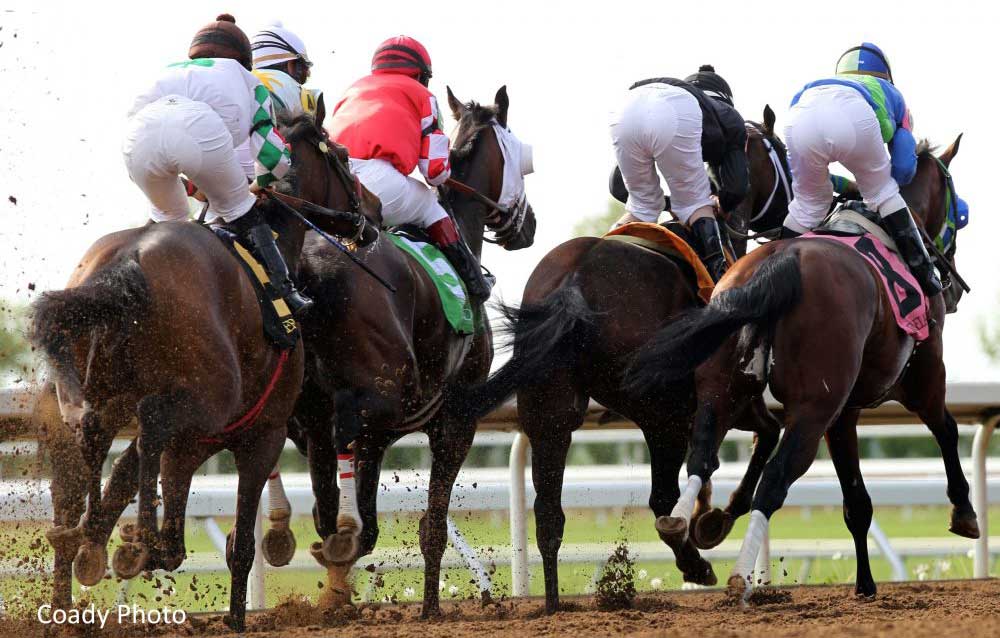
It's easy to scroll through the Horse Care or Aftercare news sections on trade publication websites and feel pretty good about the state of Thoroughbred retirement and rehoming. It seems groups like the Thoroughbred Aftercare Alliance, Thoroughbred Incentive Program, Retired Racehorse Project, and a host of adoption and rehoming organizations are everywhere. With so many horses happily prancing around show rings and lazily nibbling grass in the paddocks of pensioners, the aftercare problem in racing must be nearly solved by now, right?
Those on the front lines of rescue and rehoming efforts say we're not even close—and we probably never will be.
For one thing, the scale of the problem is big. Bigger than most people probably realize.
Research on Australian racing populations indicates that roughly 40 percent of the racing population leaves the track each year. According to a study published in 2014 in the Australian Veterinary Journal, poor performance was the reason given for 36.5 percent of those retirements. Illness or injury accounted for another 30 percent. Ten percent of horses left because they were headed to the breeding shed.
Study authors said 6.3 percent of retiring Thoroughbreds entered the slaughter pipeline at the end of their career, while 16.4 percent continued on to second careers.
The Jockey Club does not keep figures on the number or percentage of horses retiring each season. Last year alone, there were 46,144 starters in the United States; if Australia's average is similar to America's, 40 percent of 46,144 would have 18,458 horses leaving the track by the end of 2018.
Read more: Emptying The Ocean With A Teaspoon: The Challenges Of Aftercare
by Natalie Voss
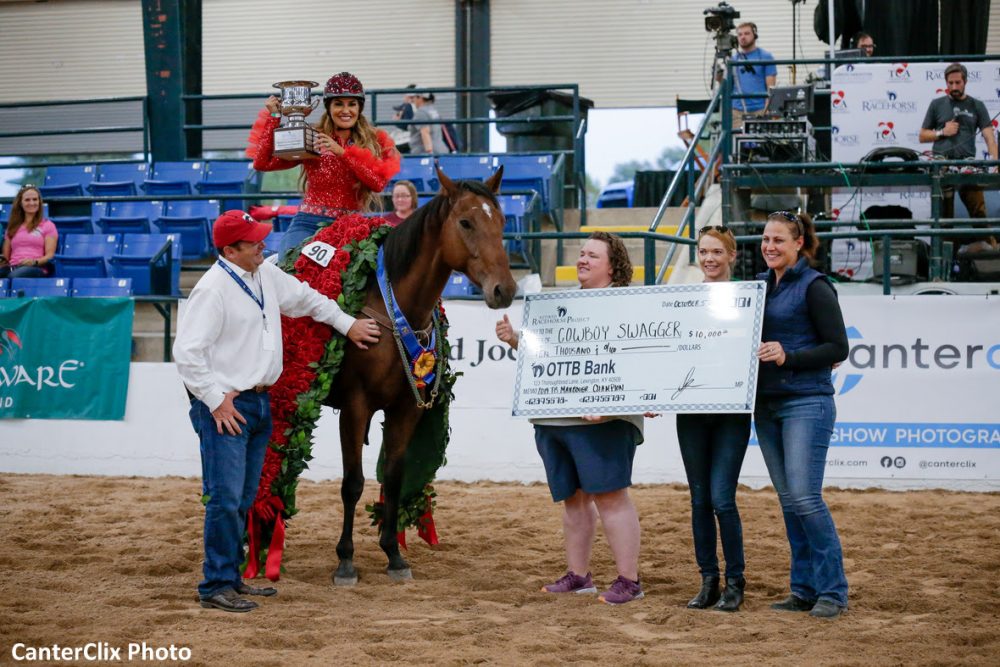
A decade ago, the word “aftercare” was not part of the industry vernacular when talking about Thoroughbreds leaving the racetrack. There were a handful of nonprofits which had battled the tide of horses retiring from racing for years. The Thoroughbred Retirement Foundation launched in 1983, New Vocations Racehorse Adoption Program in 1992, Thoroughbred Charities of America in 1990 – but those organizations' elevator pitches often started with an explanation of why they were necessary to begin with.
The conversation about off-track Thoroughbreds (fondly known as OTTBs) seems to have broadened in 2008 or 2009, in the wake of Eight Belles' high-profile breakdown after the finish of the 2008 Kentucky Derby. If she hadn't suffered a fatal injury, Eight Belles would likely never have found herself in need of retraining or sanctuary at the end of her racing days, but her death on national television prompted industry-wide self-examination. One of the aspects of racing that worried the general public seemed to be the fate of the horses who raced on the Derby undercard – the less accomplished, less successful mares and the many geldings for whom the breeding shed was not a possibility.
So, roughly ten years into the sport's most concentrated efforts to address the problem of aftercare, we at the Paulick Report wanted to know – how are we doing? What is working about the current industry approach to Thoroughbred aftercare, and what isn't? Which populations of Thoroughbreds are being best served by our current aftercare infrastructure, and which are still in need of help?
Read more: A Decade In, How Are We Doing With Thoroughbred Aftercare?
- On Aftercare: Jordan Uses Hall of Fame Cutting Horse Technique to Better Transition Thoroughbreds
- PETA is a Bully
- Ten Lessons Learned From 2019 Thoroughbred Makeover
- Rosie Napravnik’s Trio of Ex-Racehorses Excel at Thoroughbred Makeover
- Australian Firefighters Horse Calendar Photoshoot (2:56)
- Cowboy Swagger is 2019 TCA Thoroughbred Makeover Champion With Fallon Taylor
- Commentary: The Problem With ‘Naming And Shaming’ In Horse Rescue
- Willie Nelson Rescued 70 Horses From a Slaughterhouse and Let Them Roam Free on His Ranch
- The Truth About Kill Pens - Are You REALLY Saving a Life?
- The Beginner’s Guide to Adopting an OTTB