




Retire & Rehome
Whichever way we ride or however we are associated with horses, we can all agree that horse welfare and rescue is extremely important. Learn about these caring places in our Rehome section, where money and time can be donated to help horses find, or remain, in their forever home.
Many charity events help fund the good work of equine rescue organizations. Parties and auctions to benefit rescue are included in the Calendar of Events for Retire & Rehome.
Have an old friend to retire? Find a place where your horse can live the life of leisure in our Retirement section.
Do we need to add an event or rescue? Please use the useful feedback link and let us know!
by Mandy Froelich
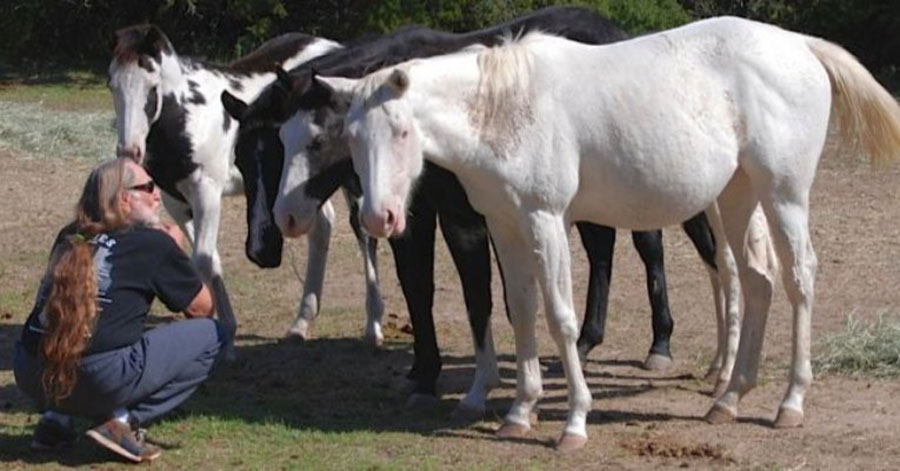
As if you need another reason to love Willie Nelson, news has recently surfaced that the musician and marijuana activist is also a horse lover. He’s so fond of them that he rescued 70 horses from being slaughtered. They now roam on his 700-acre ranch in Texas.
The country musician spends most of his time at Luck Ranch when he’s not on the road. The ranch is home to him and the name “Luck” suits in more ways than one. Nelson told Paul Venema from KSAT 12 News, “When you’re here, you’re in Luck, and when you’re not, you’re out of Luck.”
The horses are undoubtedly lucky, too and Nelson agrees. He told Venema: "“My horses are probably the luckiest horses in the world. They get hand-fed twice a day, and they were just ready to go to slaughter is probably the last thing they remembered, so they’re happy horses.”
As The Epoch Times reports, Nelson has long held a love for horses. His song Ride Me Back Home, for instance, attests to his love for the animal. Nelson also won an award in 2015 for the video to his song The Love of Horses. The video shows Nelson meeting members of Habitats for Horses who were trying to end the slaughter of horses by working to get new legislation passed.
Read more: Willie Nelson Rescued 70 Horses From a Slaughterhouse and Let Them Roam Free on His Ranch
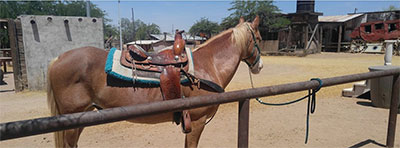
EIE has the largest Rehoming directory in the world where people can find a horse.
by Liberty Vallance
My name is Liberty Valance, and I own a kill pen horse. And it is because of my kill pen horse that I decided to pursue this area of the equine industry further. I, myself, was was ready to jump headlong into this cesspool and use my extensive equine experience to start pulling horse regularly to make a difference in their world.
I started doing kill pen horse transports here and there, and I have been to the feed lots in person. But I have a college degree in business and law, and I have been heavily involved in the horse industry for 36 years.
The more I delved into this particular activity, the more it didn’t make sense. I dug until it did. I don’t feel bad for buying Valen because he was my teacher, as horses often are the best, and I wouldn’t know now what I didn’t know then without him. This is what I learned. I didn’t write this to tell you stop caring.
In my travels, I have learned that so many people just do not have the first idea of what’s really going on in this business. Horse traders have always had a reputation for dishonesty, but for some strange reason people see “kill pen” and think these savvy businessmen are suddenly running a charity. It’s not a message to promote or discourage slaughter. It’s just.....the truth.
Read more: The Truth About Kill Pens - Are You REALLY Saving a Life?
by Acacia Courtney
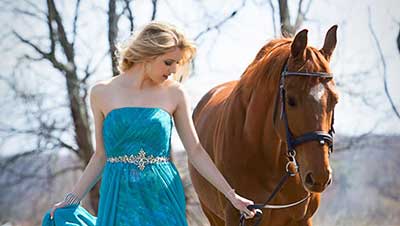
First of all – what exactly is an OTTB? An “off-the-track Thoroughbred” is a Jockey Club-registered Thoroughbred horse that was previously racing or in training to race, and has since been retired. Injury, lack of talent, and old age are examples of reasons that can result in a horse being retired from the track.
What does an OTTB do once he/she is retired? Well, that’s where you all come in. OTTBs have been known to transition into successful show horses in hunter/jumper, dressage, and other styles. They can also be trained as lesson horses, companion animals, or even for therapeutic riding programs. Like people, horses have their own individual personalities, and some are better suited to a certain job than others are.
Thoroughbred aftercare is becoming a bit more “fashionable” than it was before, and this is great news for the horses. This does not mean that you should reconsider adopting an OTTB because “everyone is doing it” and you don’t want to be looked at as basic. Sometimes it’s totally OK to jump on the bandwagon. It does mean, however, that you will have to be a little more careful and will have to do your research before looking for your newest equine project or BFF.
At the tender, naïve age of 18 I thought it would be a good idea to start a nonprofit dedicated to retraining OTTBs once their racing days were over. It certainly was a good idea, but it did end up being a much greater undertaking than I had initially expected. Racing for Home Inc. has been one of my most rewarding endeavors, but working with OTTBs is not without challenges.
by CL Cimino
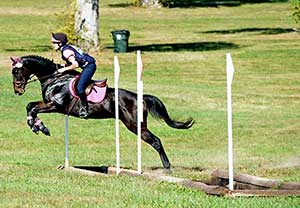
Carolyn Karlsen started the Retired Racehorse Project Thoroughbred Makeover eight years ago with internationally famous event rider Steuart Pittman and a team of dedicated people. In our exclusive interview, Equine Info Exchange catches up with Carolyn prior to the Thoroughbred Makeover, presented by Thoroughbred Charities of America.
”This is good for horse racing because at the heart and core of horse racing is race horses. The Thoroughbred Makeover was started with Steuart Pittman because horse racing has to think about, and does think about what happens to the horses when they are done racing. Not all race horses were meant to win the Kentucky Derby and these horses can live to 20, 25 or 30 years old so they need to find something to do. They need to find a second career. They need a job – like we need a job – and we want to make it happen in a way which is feasible, practical, plausible and realistic for the horses. The Thoroughbred Makeover is a way to make them a star in a second career.
”The program started eight years ago with 26 horses with prizes of $26,000 and has grown tremendously. A record 794 trainers were accepted and 500 are expected to compete for prizes over $125,000. Although it is thrilling to win a race as an owner, this is probably the most rewarding accomplishment of my life.
by Melissa Bauer-Herzog
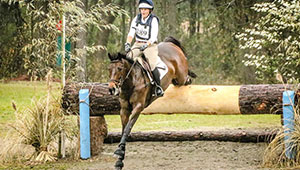
In a career that has seen her work in the racing industry and ride a variety of off-track Thoroughbreds (OTTBs), US Equestrian’s Managing Director of Eventing Joanie Morris knows a little something about the breed.
This summer, while preparing for the 2018 World Equestrian Games (WEG) taking place in in Tryon, North Carolina, Morris sat down with America’s Best Racing to tell us about her journey to the managing director position, why she loves OTTBs, and some advice for those wanting to get into eventing.
1. Can you give us a rundown on what you’ve done in your career in the equine industry, both in racing and the performance horse world?
I’ve done just about every job! I never was quite sure where it would end up, but I cleaned a lot of stalls and drove all over the eastern half of the U.S. in the process. I started out as a working student for various people once I found eventing and rode and groomed for Phillip Dutton (I wrote him a letter and what started as two weeks over Christmas break evolved into the better part of a decade). I traveled with Will Faudree to the 2003 Pan Am Games and when he was the traveling reserve at the 2004 Olympic Games and I went to Burghley with Phillip in 2005 when he had two horses in the top 10.
It was during that time that I started trying to get some experience outside of the barn and began working for ST Publishing part time as they were just down the road from Unionville in Elkton, Md. I had graduated from the University of Delaware (with a history degree of all things) and was trying to figure out what was next. I was lucky that the Clancys gave me a chance. I went to Saratoga by virtue of Joe and Sean, and we traded advertising for a couch in a house that Richard Valentine was renting. It was an epic summer to say the least. I worked crazy hours, made some lifelong friends on the racetrack and had a newfound appreciation for the scope of the Thoroughbred industry (plus I had the kind of fun that you can only have in Saratoga when you are in your 20s).
Read more: Q&A with US Equestrian’s Joanie Morris: ‘No Truer Athletes Than Thoroughbreds’
by Melissa Bauer-Herzog
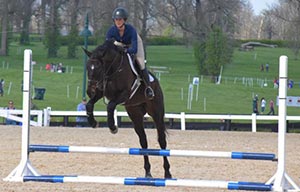
If you follow the Retired Racehorse Project’s (RRP’s) Thoroughbred Makeover, chances are you’ve often seen Isabela De Sousa’s name at the top of the results. The young rider has quickly made a name for herself, winning the show jumping division at the Makeover for three years running among her long list of accomplishments.
Born to a horse racing family, her mom is an equine veterinarian at Hagyard Equine Medical Institute and her father a manager and partner at Hidden Brook Farm so there was little doubt De Sousa would join the horse industry. She can’t remember a time when she didn’t ride horses and soon she was retraining retired racehorses, with illustrious names such as Dewey Square and Cozmic One among the horses she’s trained.
Read more: Lifelong Equestrian Isabela De Sousa Makes Splash with Retired Racehorses
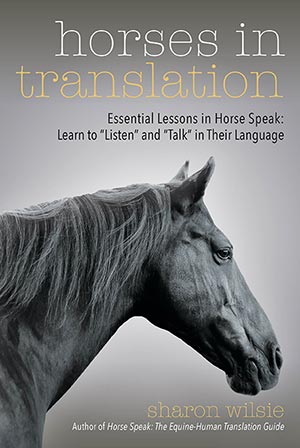
In the fall of 2017, horse trainer and rehabilitation specialist Sharon Wilsie took the international horse world by storm with her system of “Horse Speak” and the bestselling book by the same name. It offered a practical approach to “listening” and “talking” to horses in their language instead of expecting them to comprehend ours. In her new book Horses in Translation, Wilsie tells true stories of how serious “problems” can be solved using Horse Speak, like this one, about an OTTB and the woman who desperately wanted to connect with him.
Only a few weeks after buying an off-the-track Thoroughbred named Journey, Ann started to have her suspicions as to why the horse had been so reasonably priced. As Journey settled into his new home, a “mean side” started to show up. For reasons Ann could not fathom, he would suddenly glaze over, and rear, kick, or bite.
At first Ann applied herself to trying to figure out what the triggers were, but as time went on, she came to realize that she simply could not figure out her horse, no matter how hard she tried. Things degenerated to the point where she could not even go near him without a whip in her hand for self-defense. Finally, even that failed: One day Journey grabbed her by the upper arm, nearly breaking it as he tossed her like a rag doll several feet away.
Ann reached out to me in a state of desperation. I was traveling to her area for a clinic and said I would carve out some time to meet with her and see what could be done. Ann had done some homework and tracked down what she could of Journey’s history. He had raced until he was four, and then, considered washed up, he’d been gelded and sold off at auction. Since then, he had been through several homes, and each time trainers had been called in to try and help solve his issues. Through it all he only seemed to get worse. Now that he was 11, Ann felt for certain that she was Journey’s last hope. And if she could not help him, she would not sell him either, because she felt he was a danger to others. She had decided he could live out his days on the farm, and no one would touch him.
Read more: Becoming an Older Mare: Helping an OTTB Start Over
- How Old Is ‘Old’ For A Thoroughbred?
- One-Year Update On The Shocking Untold Story Of Maria Borell
- Chores That Make Dreams Come True
- Nonprofit Receives National Recognition for Finding Retired Horses Homes
- From Racetrack to Polo Field, Nic Roldan on Retraining the OTTB
- From Post to Picket Line: Retired African Racehorses on Safari
- Christmas: A Time to Remember the Year ’Round Wishes of Animals
- Harry & Snowman, Harry de Leyer’s View of Horses During WWII
- Adopted horses: A second chapter (2:30)
- Adopted horses: A Second Chapter