




Tack & Farm
Our Tack & Farm section features an Apparel section to find both practical and fashionable riding attire. If you ride English & Western or Race, many sources are available in the Tack section.
Building a barn? Need an architect for your equine dream home? Find one in Barns & Stalls.
Have a hungry horse? Of course you do! Find a place to buy your feed and tuck your horse in at night in the Bedding & Feed section. Looking for a place to keep your horse? You can find it in the Horse Boarding section. Keep your horse happy and beautiful with resources in our Grooming section.
Traveling? Find a Shipping company or Horse Sitting service if your horse is staying home!
Running and maintaining a farm or stable is a continuous effort, and to help find products or tools you need, please see our Equipment, Fencing and Management Tools sections.
Seeking Services? Find financial and tax expertise in our Accounting section. Companies who will help protect your investment are found in the Insurance section. For those who want legal advice about purchasing, liability, and other issues, please look at the Equine Law section to find an expert. Build and promote your business with teams from Marketing / Videography / Web Design.
Do we need to add more? Please use the useful feedback link and let us know!
This isn’t your run-of-the-mill leathercrafting project! In this video, Chuck shows us how to create unique saddlebag style shoulder bags—or a full-sized set of saddlebags if you prefer! This simple pattern features two basic pouches connected by a yoke, and the simple dimensions allow you to easily size up or down as needed. The result is a unique accessory that can be customized to your heart’s desire!
For a full list of supplies and the pattern used in this video, visit WeaverLeatherSupply.com
In this video, Daniel Reach demonstrates a creative technique for adding unique texture to your leather projects. Using a textured backgrounder and sandpaper, you can create a slight color variation throughout the leather when painted or dyed. Give this technique a try on your next leather project!
Read more: Leather Texture Techniques (7:26) - Weaver Leather
by Nicky Hoseck
Saddle-Savvy or Stumped?
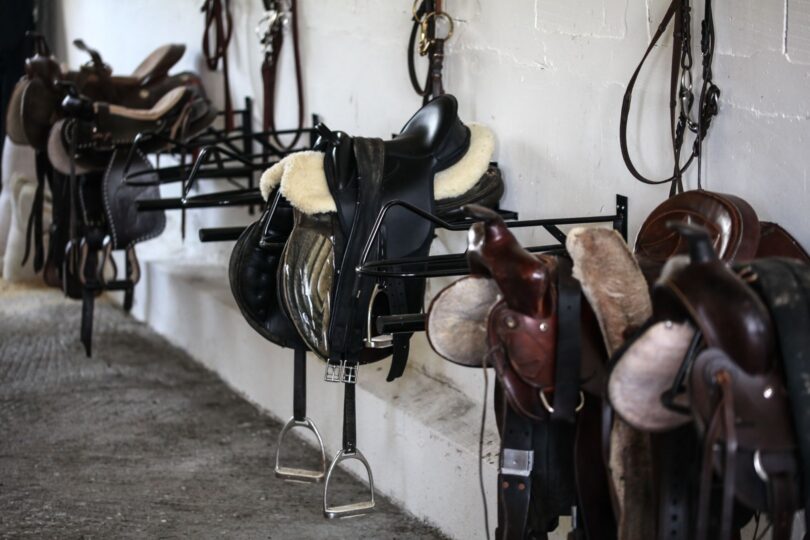
While it is possible to ride a horse without a saddle, using one is usually a lot safer and more comfortable for horse and rider. Not only does the saddle help me balance, it also distributes weight more evenly to protect my horse’s back. He probably doesn’t want my seat bones digging into his spine!
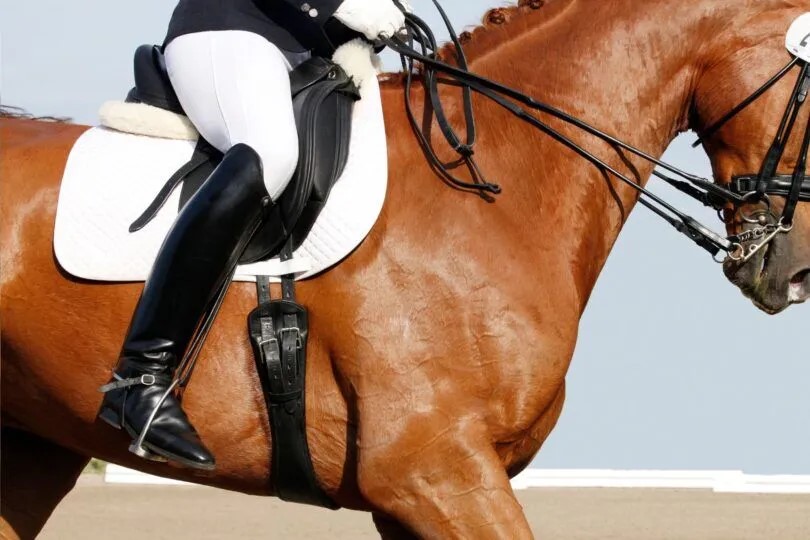
Finding a saddle that fits you and your horse correctly is a top priority, but you also want something that’s comfortable and designed for your chosen discipline. That said, an All-Purpose saddle can be a great place to start until you narrow down exactly what you’d like to do!
Saddle Considerations
Safety should be uppermost in your mind when you’re looking for a saddle. Avoid anything that might put you in danger or cause your horse discomfort. When in doubt, ask a professional training and/or saddle fitter for assistance.
Discipline
Western or English is the first decision you need to make about your saddle. After that, you can either opt for an all-purpose design or focus on discipline-specific saddles.
Availability
If you live in the middle of nowhere or, like me, in Africa, you may struggle to find your chosen saddle at an affordable price. Getting a Sommer saddle imported from Germany or a Syd Hill & Sons stock saddle sent over from Australia could leave your bank balance reeling, so it’s often worth limiting your choices to what’s available nearby.
Fit (You & Your Horse)
Some saddles prioritize rider comfort, while others focus on the horse. Traditionally, Western saddles were fitted to the rider, but these days, it’s generally accepted that the saddle must fit the horse first and foremost. After all, an ill-fitting saddle can cause muscle atrophy, pinch nerves, and create painful pressure points.
Comfort
Your saddle must fit your horse correctly, but you also need some element of comfort in the saddle. There’s little pleasure to be had while perched uncomfortably on a rock-hard piece of leather!
Budget
Saddle prices vary wildly! You can pick up a basic starter saddle for a couple of hundred dollars or spend thousands on a high-quality, handmade specialty.
You can also save money without skimping on quality by looking for a used or second-hand saddle—just watch out for scams.
Saddle Materials
While the very first saddles were made from cloth, leather soon became the go-to material and remains so today. Synthetic saddles have gained popularity due to them being more affordable than leather saddles. They’re also lighter and easier to clean.Leather
- Pros
Long-lasting, durable, comfortable, provides good grip, and naturally breathable. - Cons
Expensive, heavy, and requires a lot of maintenance.
Synthetic
- Pros
Affordable, lightweight, and easy to clean. - Cons
Not as naturally grippy or breathable and won’t last as long as leather.
English Saddles
The English-style saddle is smaller and lighter than the Western saddle.
English saddles were developed in Europe in the 18th century. With its smaller, flatter seat and lower pommel and cantle, the English saddle allowed the rider more freedom of movement, making it easier for them to jump hedges and ditches.
Types of English Saddles
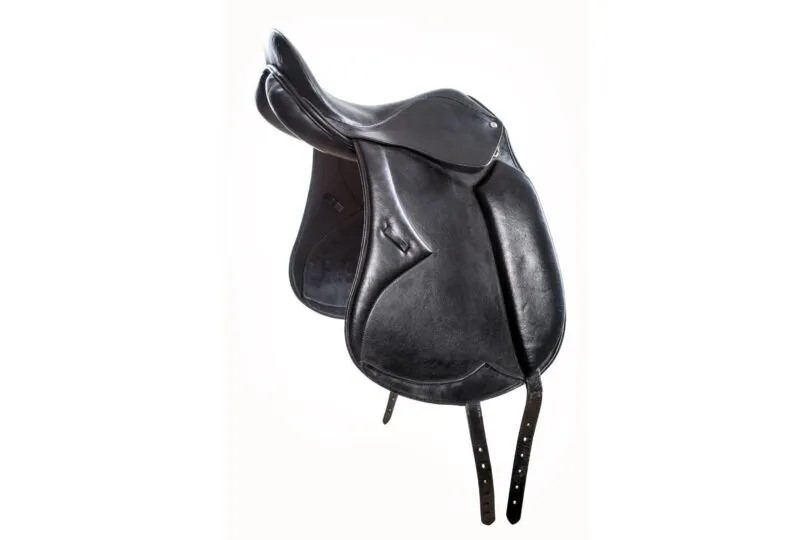
Dressage
- Description: The dressage saddle has a deep seat and large knee rolls that secure the rider in a balanced position close to the horse. The flaps on either side of the saddle are long and straight, reflecting the long leg position preferred in the dressage arena.
- Purpose: The dressage saddle aligns the rider’s hips and pelvis with the horse’s movements, enabling the rider to sit deep and absorb the motion. The knee rolls help keep the rider in the correct position and minimize movement.
- Key Benefit: A dressage saddle positions the rider in an upright position, perpendicular to the ground. This increases security and harmony with the horse. It’s also easier to position your legs correctly in a dressage saddle.
- Drawback: Dressage saddles have higher pommels and cantles that may restrict the rider’s movements. For instance, you can’t jump a horse while in a dressage saddle because the pommel will prevent you from adopting the correct forward position.
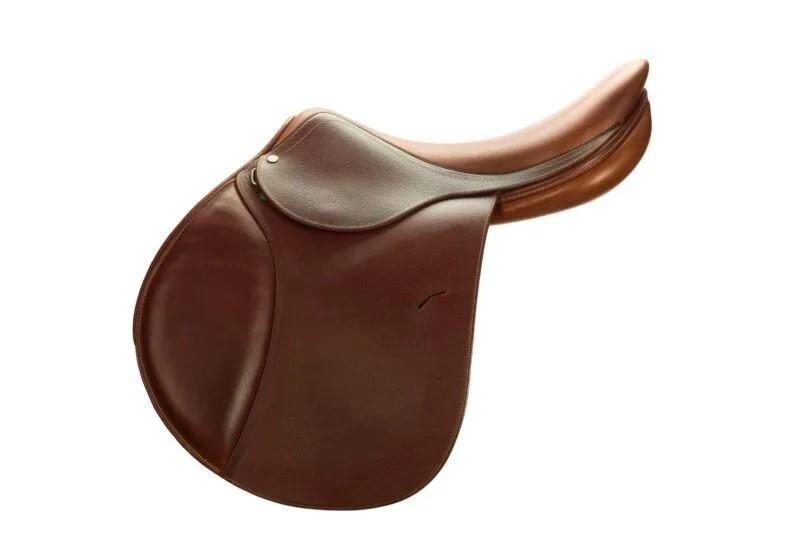
Show Jumping / Close Contact
- Description: Unlike the dressage saddle, a close-contact saddle has curved, forward flaps designed to accommodate a shorter stirrup and higher knee placement. They have lower pommels and cantles than dressage saddles and shallower seats.
- Purpose: The close contact or showjumping saddle enables riders to get out of the saddle and adopt a forward, two-point, or hunt seat over obstacles.
- Key Benefit: A close-contact saddle won’t restrict a horse’s shoulder movement and makes it easy for the rider to get out of the saddle when necessary.
- Drawback: A close-contact saddle has a shallow seat that offers little support or stability, making it harder for the rider to balance.
All-Purpose Saddles
- Purpose: All-purpose saddles are ideal for equestrians who want to participate in lots of different disciplines. You can jump in an all-purpose saddle, go for a trail ride, and do a low-level dressage test in one.
- Key Benefit: The all-purpose saddle is extremely versatile and can be used for almost any discipline.
- Drawback: You can only go so far with an all-purpose saddle. If you want to jump higher, you’ll need a close-contact saddle. Similarly, if you want to compete in more advanced dressage competitions, you’ll need a dressage saddle.
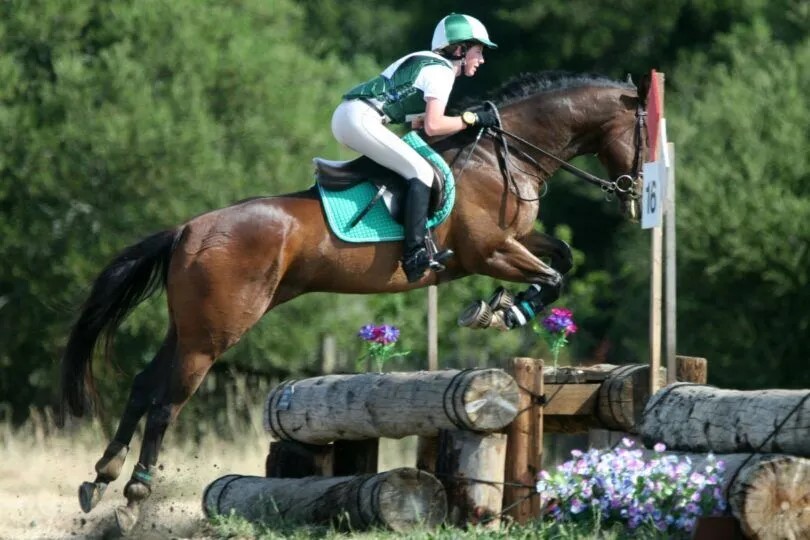
Cross Country / Eventing
- Description: An eventing saddle is very similar to a jumping saddle but tends to have shorter flaps and more forward knee rolls to accommodate a shorter stirrup. Many cross-country and eventing saddles are also mono-flap.
- Purpose: A cross-country saddle gives the rider close contact with the horse. Which along with the shorter stirrups, helps when tackling large fences.
- Key Benefit: Helps the rider maintain a two-point position for longer periods than a jumping saddle.
- Drawback: You can’t ride a dressage test in a cross-country saddle because it’s not designed for the longer leg position required.
Saddle Seat / Cutback
- Description: The saddle seat or cutback saddle is extremely flat, and places the rider slightly behind the horse’s center of gravity. A low seat and cantle enable the rider to sit deep, moving with the motion of the horse.
- Purpose: The cutback saddle fits horses with high withers and a greater range of front-end movement. They are often used in saddle seat competitions where the emphasis is on the horse’s high-stepping action and high-head carriage.
- Key Benefit: The cutback saddle is specifically designed for horses with high withers and a high action in front.
- Drawback: Many cutback saddles actually pinch the horse’s withers rather than reducing the pressure. They also tend to have thin panels that may not adequately protect the horse from the hard tree.

Racing
- Description: Racing saddles are flat and lightweight, with small saddle flaps and short stirrup leathers.
- Purpose: Racing saddles are designed to keep the jockey crouched over the saddle in an aerodynamic position that allows the horse complete freedom of movement.
- Key Benefit: Racing saddles are small and lightweight, allowing the horse to travel at high speeds with little interference. Rather than sitting on the saddle, the jockey hovers above it perched on very short stirrups!
- Drawback: Racing saddles are only suitable for racing, providing little support for the rider and little protection for the horse. Racing saddles also exert considerable pressure on the horse’s withers, which could cause discomfort and loss of performance.
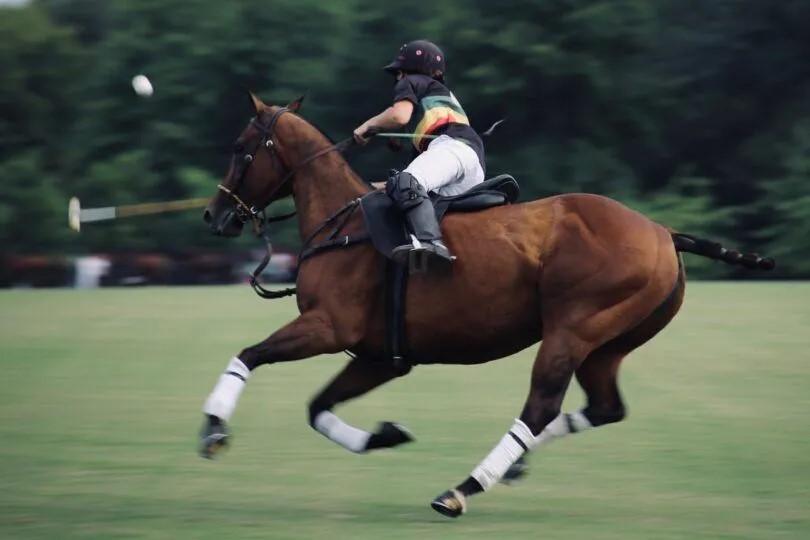
Polo
- Description: A polo saddle is very similar to an all-purpose saddle, although it tends to be lighter and has a higher pommel and lower cantle. The padding under a polo saddle is also wider, helping the saddle grip the horse more securely.
- Purpose: Designed for polo, the polo saddle has a high pommel to give the rider extra security when swinging for the ball and a lower cantle so they can lean further back. There are no knee rolls as these would restrict the rider’s movements.
- Key Benefit: A polo saddle will optimize your performance and withstand the rough and tumble activities required on the polo field.
- Drawback: Polo saddles are designed specifically for polo and will likely not perform well in any other discipline.
Sidesaddle
- Description: Unlike other English saddles, the side saddle has two pommels, each of which supports one of the rider’s legs. Both the rider’s legs are positioned on the left side of the horse, with the left leg in the same position as it would be were the rider astride a normal saddle.
- Purpose: Traditionally, the side saddle was designed for women wearing skirts or dresses to ride horses in fine clothing. These days, some people choose to ride side saddle simply for the fun of it.
- Key Benefit: Using a sidesaddle, you sit higher off the horse, so you could continue riding a horse that normally might be viewed as a bit small for you. A sidesaddle may also improve your balance and posture, and prevent you from getting ahead of your horse when jumping.
- Drawback: It can be a lot harder to dismount from a side saddle in an emergency.
Read more: 17 Different Types of Saddles (When to Use Which One)
Shoeing a horse with thrush and navicular disease. I'll also put on snow pads to make him more comfortable.
S&S Horseshoeing - Maverick Vet Service
- Horse Farm
- Tall vs. Short Boots: What’s Best for Equestrians?
- Equestrian Business Services
- Overcoming a Horse Trailer Accident: Cowgirl Shares Hope
- The Leather Element: Rare Tools - Weaver Leathers (8:53)
- Keeping a Straight Basketweave Stamp Design - Weaver Leathers (4:27)
- Cornell Equine Seminar - Mud Management on Horse Farms (59:59)
- Two-point, Half-Seat and Light Seat explained with Teresa Kackert (7:05)
- Back in the Saddle
- Breast Collar and Back Cinch Adjustment with Julie Goodnight (6:46)