




Tack & Farm
Our Tack & Farm section features an Apparel section to find both practical and fashionable riding attire. If you ride English & Western or Race, many sources are available in the Tack section.
Building a barn? Need an architect for your equine dream home? Find one in Barns & Stalls.
Have a hungry horse? Of course you do! Find a place to buy your feed and tuck your horse in at night in the Bedding & Feed section. Looking for a place to keep your horse? You can find it in the Horse Boarding section. Keep your horse happy and beautiful with resources in our Grooming section.
Traveling? Find a Shipping company or Horse Sitting service if your horse is staying home!
Running and maintaining a farm or stable is a continuous effort, and to help find products or tools you need, please see our Equipment, Fencing and Management Tools sections.
Seeking Services? Find financial and tax expertise in our Accounting section. Companies who will help protect your investment are found in the Insurance section. For those who want legal advice about purchasing, liability, and other issues, please look at the Equine Law section to find an expert. Build and promote your business with teams from Marketing / Videography / Web Design.
Do we need to add more? Please use the useful feedback link and let us know!
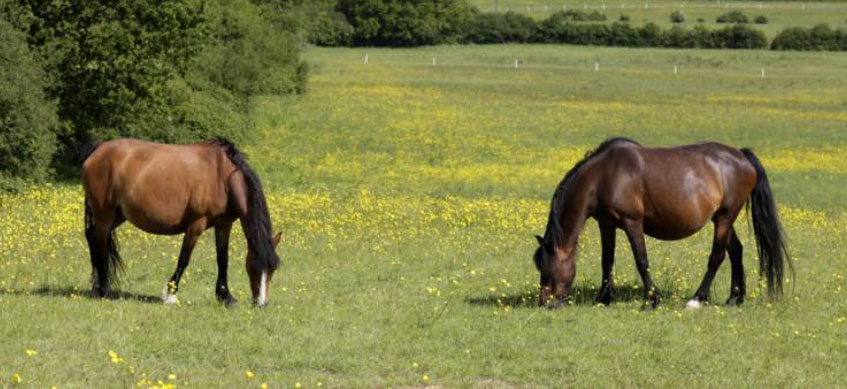
Whether you keep your horse on a few acres or have at your convenience rolling hills as far as the eye can see, pastures should be managed to ensure that grass provides optimal nutrition for horses. Each farm is different, but some management strategies are universal no matter the size or location of your farm.
Soil testing. Soil profile, including mineral content and pH, varies greatly from farm to farm and region to region. For this reason, soil testing is recommended in order to determine if and what kind of fertilizer may be necessary. Typically, your local Cooperative Extension Service office can help you with a soil test, and supply a report with fertilizer recommendations. Soil tests are often free or inexpensive and well worth the effort.
Stocking rate. Stocking rate is important if you are relying on pasture to meet the majority of your horse’s nutritional needs, and is defined as the number of acres available per animal. For an average 1,000-lb (450-kg) horse, two acres of well-managed, established pasture is recommended during the growing season. If you have four horses, for example, you’d need a minimum of eight acres. If stocking rate is higher, supplemental forage, such as hay and possibly a concentrate, may be necessary to meet the horse’s daily nutrient needs. Higher stocking rates stress pastures and reduce the amount of available nutrients.
Rotation. A rotational grazing plan keeps grasses healthy. Just like horses, plants need a chance to rest and rejuvenate after stress (heavy grazing, drought, etc.). Horses are able to graze right to the ground, and hooves can cause compression and divots in the ground. The higher the stocking rate, the more important it is to have a rotational grazing plan.
Even with only two paddocks, rotation can work. When pastures are 7-10 inches tall, turn out horses. When the pastures are grazed down to 3-4 inches, allow the pasture to rest and turn out horses in the other area. Additional pasture areas will improve results. Ideally, rotating in four- or five-week cycles is recommended but will depend on the stocking rate and amount of space available.
Sacrifice area. A sacrifice area, also known as a drylot, is a place where horses can be turned out when pastures are too wet, have not grown sufficiently to allow grazing, or when pastures are resting. Sacrifice areas are also useful for horses who cannot be maintained on pasture, such as those with metabolic concerns. Shelters, water sources, and sometimes feeders are often placed in sacrifice areas.
These areas should be large and comfortable enough to accommodate the number of horses on the farm, leaving plenty of room for horses to avoid pecking-order squabbles.
Mowing and sward height. Regular mowing helps reduce weeds. Mowing height is an important consideration. Since grasses store energy in the bottom of the plant closest to the ground, mowing too short is counterproductive. Mowing to a height of 3-4 inches is generally appropriate. Pastures should also be dragged to break up and dry manure.
Be sure to consider a quality ration balancer or vitamin and mineral supplement that will supply horses with nutrients not found in sufficient quantities in pasture. Keep water and salt sources clean and readily available.
The effort put into pasture maintenance will yield nutritious forage for your horses year after year.
There are more informative articles in our section on Tack & Farm.
Are you interested in promoting your business or sharing content on EIE? Contact us at info@equineinfoexchange.com
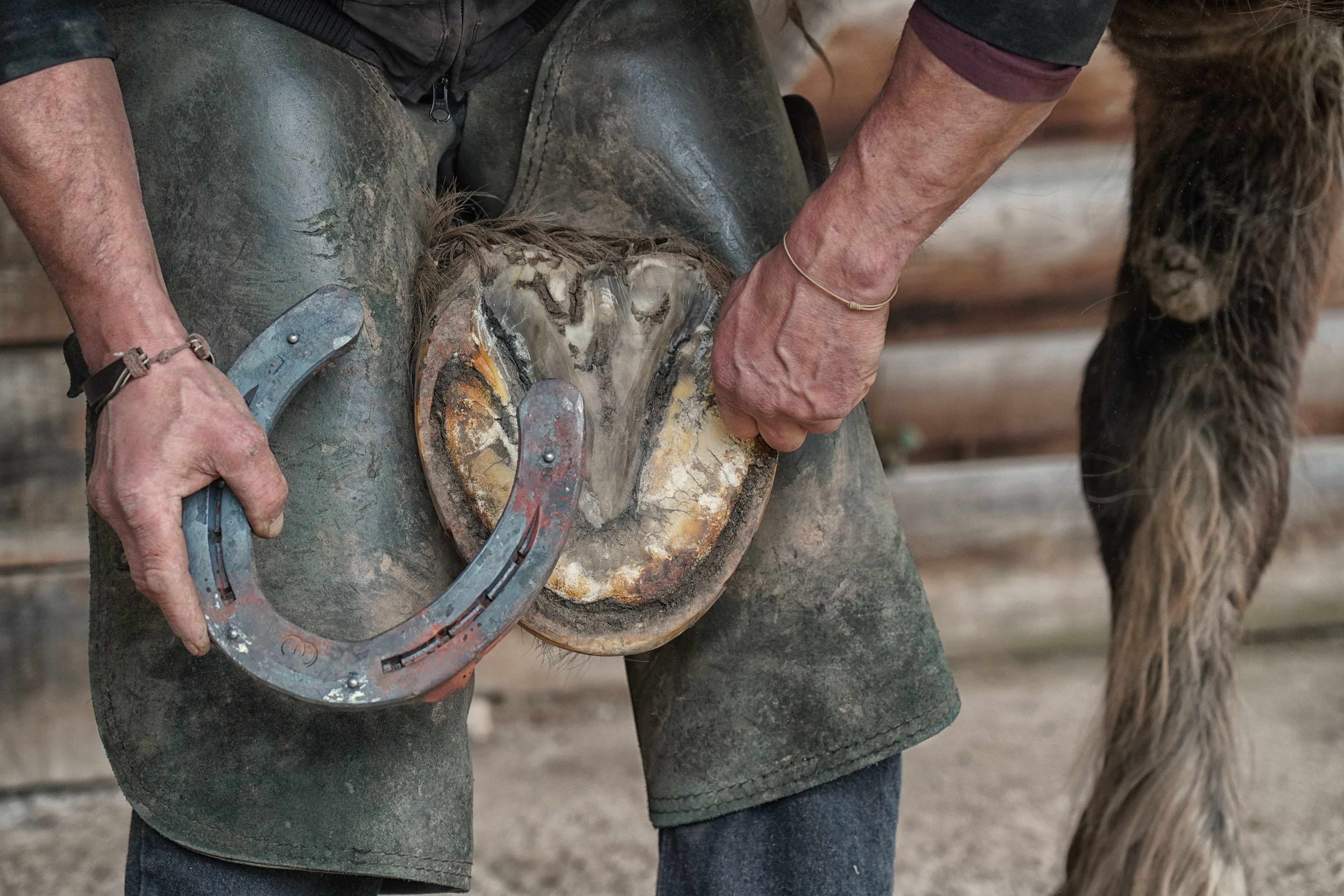
The right farrier for you is a certified, continuously educated professional who prioritizes your horse's long-term soundness, communicates well, and operates on a reliable schedule. Key indicators include a gentle demeanor with your horse, custom, proactive hoof care rather than a "one-size-fits-all" approach, and constructive, honest communication.
Here is how to evaluate if your farrier is the right fit:
- Professionalism & Education: Look for American Farrier Association (AFA) certification (e.g., CF or CJF) and evidence of continuing education, as the best farriers are constantly learning.
- Skill & Approach: A skilled farrier should not be trimming the hoof to fit the shoe; instead, they should be balancing the hoof to the horse's conformation. They should be knowledgeable about modern techniques and not use a generic, one-size-fits-all approach.
- Horse Behavior: They should be patient, gentle, and "horse savvy," handling your animal safely and minimizing stress.
- Communication & Reliability: Good communication is vital. They should be willing to explain their methods, discuss your horse's needs, and arrive when scheduled, or communicate delays promptly.
- Trust and Teamwork: A good farrier will act as a partner, often collaborating with your veterinarian, and not be offended if you ask for a second opinion on a difficult issue.
Signs it might be time for a new farrier:
- They refuse to discuss the horse's needs, according to the Tennessee Farmers Cooperative website.
Read more: Does the Shoe Fit? Farrier Frustration – Is Your Shoer the Right One for Your Horse?
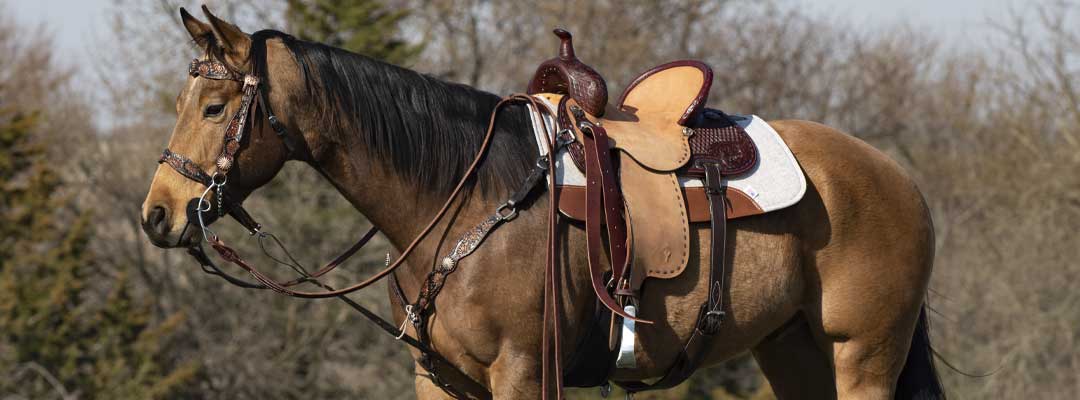
Purchasing a new saddle? Excitement, commence! Take a gander at these five helpful Q&As, answered by our friends, Circle Y, to help you in this process.
- Are there different kinds of Western saddles?
- How should riders sit on, or in, the saddle?
- Which saddle seat size is preferred by riders?
- How much can Western saddles weigh?
- Which saddle tree size will best fit my horse?
There are many different types of Western saddles to suit your specific discipline, including saddles made for trail riding, barrel racing, roping, and showing. Learn about the different types of Western saddles produced and the differences in each.
A saddle with a 4 ½” or 5” cantle provides a deep, secure seat. A saddle with a 2 ½”, 3”, 3 ½” cantle will feel more open to the rider.
Seat size for the rider definitely varies on personal preference and discipline, with seat sizes ranging from 10” (kids) to 18” and half sizes also available. In general, for seat size, you should allow for four inches between the front of your body when you're sitting comfortably and the swell of the saddle. For speed events and roping, a tighter fit is preferred. For trail riding, sizing a half size up is usually preferred rather than snug.
Western saddles can range in weight from 20 to 50 pounds, so depending on rider preference and strength, this aspect can be important when purchasing a new Western saddle.
Professional saddle fitters are available in the industry to study your horse for a sure fit; however, here are some general guidelines to help you in making this decision.
- Horses with a narrow, defined wither are best suited for a Medium tree
- Horses with a wide, with slightly defined, wither are best suited for a Wide tree
- Horses that are Mutton withered, with a big shoulder, should best fit a Foundation wide
- Horses with a really wide back and wither are best suited for an Extra wide
See a wide selection of saddles and tack available.
Additional resources:
All photos courtesy of Valley Vet.
There are more informative articles in our section on Tack & Farm. While you're here, take a look at our Curated Amazon Store.
Are you interested in promoting your business or sharing content on EIE? Contact us at info@equineinfoexchange.com

Classic Equine removes the guesswork from leg protection, so you can spend more time riding and enjoying a healthy, happy horse. Provided by Equibrand
Horses are designed to move. That's something all horse owners understand (sometimes a little too well). In the wild, they rely on their legs to make quick, powerful movements to get to safety quickly. When you're riding them, they move similarly, but often we ask them to do those same movements more precisely and intensely (especially when they're training for intense rodeos, races, and shows). The quick turns, sliding stops, and the power needed to move out to a dead run can put a lot of stress on their legs if you're not careful.
That's where leg protection comes in.
Leg protection should be one of the first things you consider before swinging a leg over your equine partner. At Classic Equine, we understand that education is key to ensuring long-term health and success for you and your horse. Here are some ways our extensive line of boots can provide the ultimate protection for your horse.
Splint Bone Protection and Support
Horses have two splint bones on each leg, the medial and lateral, to support the cannon bone, stabilize the leg, attach ligaments and tendons, and help absorb impact during movement.
Boots known as ?splint boots? help protect from blows and crossfire injuries under saddle and support soft tissue structures of the lower limbs. Some boots are built primarily for protection, others for support, and some are designed to do both. Regardless of what you're looking for, Classic Equine's got your horse covered.
-
The only sling-style boot on the market with an outer strike pad for superior protection. Instead of being sewn on the inside of the boot, it is positioned on the outer part of the pad and protects the medical side of the cannon bone. Lightweight and flexible, it allows natural movement while providing support.
Quick and easy to put on, it's got an ergonomic design and bound edges to keep the dirt out.
-
Known for the original, patented Cradle Fetlock System, the iconic Legacy2 sports medicine boot provides both protection from crossfire injuries and support. It's the only boot on the market with an inner splint pad, with a neoprene ridge designed to fit between the cannon bone and supporting ligaments and soft tissue to help prevent the boot from turning.
The boot mimics the horse's natural anatomy, supporting the suspensory ligaments. This is Classic Equine's best-selling and most trusted product among professionals. With a tough, ballistic material that protects the fetlocks and hook and loops that securely keep everything in place, this boot is ready to be put to work.
-
An evolution of the innovative Legacy2 boot, now featuring individual abrasive-resistant cells on the cradle that supports the fetlock. These cells allow independent movement and stretching with each stride.
Like the original Legacy2, it incorporates the patented Cradle Fetlock System, offering protection and support. The separate abrasive-resistant cells enhance stretchability, which lets you get a tighter, more secure fit. It supports the fetlock without restricting movement and maintains a snug, clean fit to keep dirt out. This boot is very form-fitting, flexible, and a favorite across all Western disciplines.
-
This splint boot is specifically designed to keep your horse's legs cool while providing protection. Its perforated foam body draws heat away, and the durable, flexible mesh cover offers extra toughness where needed. Lightweight and simple to put on, it promotes airflow to prevent muscle fatigue from overheating.
The leather splint pad is paired with shock-absorbing nitrate lining for added protection. Ideal for young horses, beginners, or for light exercise.
-
ProTech Splint and Hind
Available in both front and hind versions, this hard-shell protective splint boot was the first on the market in 2006. The front pair features a hard-shell splint pad and tendon guards that are strategically positioned to protect the inner splint bone, fetlock, and surrounding soft tissues, while still allowing airflow through the soft jersey lining. The hind boots were designed as skid boots, with a hard-shell cup protecting the fetlock and extended protection up the leg.
Overreach Protection
When your horse gets to going fast or is still figuring out where his feet are, he risks his hind foot sticking the back of the front foot, called "overreach." Aside from the annoyance of pulling a shoe, this can cause serious injury to sensitive areas of his heel and pastern.
This is where bell boots come into play.
-
Classic Equine's #1 selling bell boot. If you've ever put a pair of these on, you know there is a small wedge inside the back of the boot. It's designed to fit into the natural indentation of the horse's pastern. This contoured shape keeps the boot in a place to protect the hoof, heels, coronet band, and surrounding structures through strenuous maneuvers.
Made from 2520 denier DynoHyde material, these boots are tough. The reinforced double hook-and-loop strap closures secure the boot in place for consistent protection. Also available with fleece lining for horses that need added protection from deep sand or have longer pasterns.
-
An evolution of the original DyNo Turn, this bell boot features added flexion material on the back, resulting in the most technologically advanced bell boot on the market. This added honeycomb protection provides impressive strike concussion protection. It still features the same dense, shock-absorbing center and a soft jersey lining as the original.
Healthy Legs=Happy Horse
Muscle fatigue often leads to injury, and excessive heat can quickly cause fatigue. Therefore, it's crucial to be aware of how long your horse's boots stay on, as they should only be used when necessary, not for the entire day.
After your ride, be sure to rinse your boots to wash away sweat, dirt, and grime. This simple step helps prolong their life and keeps them ready for your next ride. Once they are all dry, keep them organized in a Boot Accessory Tote.
Clean boots mean happier, healthier horses!
Whether for horse, livestock or pet, Valley Vet Supply is your one-stop shop for trusted care. Explore more of our Classic Equine products at ValleyVet.com.
All photos courtesy of Valley Vet.
There are more informative articles in our section on Tack & Farm. While you're here, take a look at our Curated Amazon Store.
Are you interested in promoting your business or sharing content on EIE? Contact us at info@equineinfoexchange.com
- Should I Stay or Should I Go? Finding a New Barn for Your Horse
- Equine Enrichment In A Digital World: Small Barn Tweaks, Big Horse Wins
- Tackling Trailer Safety
- 5 Smart Features to Look for in a Turnout Blanket This Fall
- Five Careers in the Equine Industry
- Five Tips About Pigeon Fever
- Beating Summer Heat with Your Horse
- Five Tips for Preventing Heat Stress in Horses
- Five Tips for Protecting Your Horse From Flies and Mosquitoes
- Five Tips for Purchasing a Used Saddle