




Health & Education
We all want the best care possible for our horses. The Heath & Education section covers both Learning Institutions, Organizations as well as many sources for equine assistance including Veterinarians and Farriers.
For those who want a to formally study horses, the Education section includes College Riding, Equine Studies, and Veterinary Schools. Learn about the wide variety of horses in the Horse Breeds section. Supplements and Treatments Therapy are also included in the section.
Everyone can learn from Fine Art and there are some specialty Museums that might surprise you.
Horses as a therapy partner enrich the lives of the disabled. These facilities are listed in our Therapeutic Riding section. To help children and young adults build confidence and grow emotionally, please see the resources available on the Youth Outreach page.
Looking for a place to keep your horse? You can find it in the Horse Boarding section. Traveling? Find a Shipping company or Horse Sitting service if your horse is staying home!
Want to stay up to date with the latest training clinics or professional conferences? Take a look at our Calendar of Events for Health & Education for the dates and locations of upcoming events.
Do we need to add more? Please use the useful feedback link and let us know!
by A.L. Fowler, J.D. Pagan, V.L. Erwin with Kentucky Equine Research
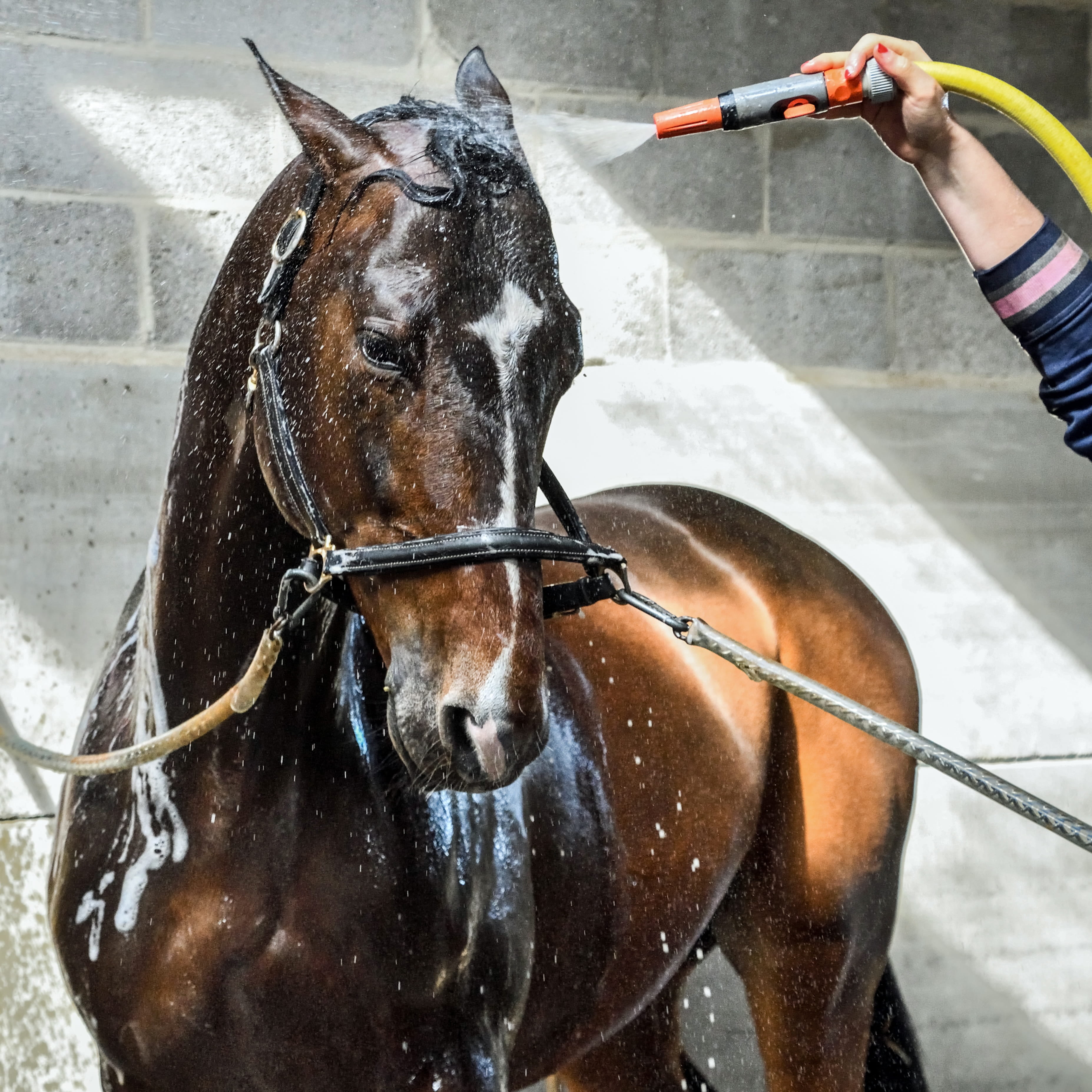
Cooling exercised or overheated equines is critical to avoid heat-related illnesses. Applying water is effective for cooling horses 1,2, and a hose is commonly used to continuously apply water. However, running water from a hose is not always accessible and a bucket of water and sponge may be a suitable alternative for applying water in these situations.
The objective of this study was to determine if there were differences in heart rates and cooling rates when horses were either sponged, hosed, or walked following exercise.
Eight Thoroughbred geldings (BW: 585±39 kg; age: 11±2 yr) with percutaneous thermal-sensing microchips (PTSM) implanted in their middle gluteal muscle (GLUT) were used in an incomplete 3 x 3 Latin square design over three week-long periods. Weekly, horses completed a 13-min SET on an inclined (3o) high-speed treadmill (max speed: 8 m/s; peak heart rate: 179±15 bpm).
Three cooling treatments were applied post-exercise:
1) WALK: walking for 5 min,
2) HOSE: water applied with a hose over the entire body for 5 min, and
3) SPONGE: water applied using a large sponge over the entire body for 5 min (~28 L).
Following the cooling treatments, all horses walked for 5 min and then returned to their stalls with overhead fans. Heart rate (HR), using a HorsePal HRM G2 Handle, respiratory rate (RR), and GLUT temperature were taken before exercise (baseline) and then at predetermined intervals for 60 min post-exercise.
Changes from pre-exercise temperatures were fitted to an exponential one-phase decay model to determine the cooling half-life (t1/2). Data were analysed using a repeated measures ANOVA.
The treadmill exercise increased GLUT temperatures to 40.1±0.5ºC (pre-exercise: 37.0±0.6ºC). Both HOSE and SPONGE had shorter GLUT temperature half-lives (t1/2) post-exercise than WALK (WALK 33.22±11.10 min; SPONGE 14.88±6.10 min; HOSE 16.00±5.52 min; mean ± SD; P<0.01). A shorter t1/2 is indicative of a faster rate of cooling.
RR returned to baseline by 5 min post-exercise for HOSE, 10 min for SPONGE, and 20 min for WALK (P<0.05). HR of all treatments returned to baseline by 15 min post-exercise and WALK had a higher overall HR compared to both HOSE and SPONGE (P<0.05).
Both hosing and sponging were effective at cooling horses post-exercise and were better than just walking. In this study, liberal amounts of water were sponged over the horse’s entire body. Applying smaller amounts of water to just the neck and head may be less effective.
References:
1Marlin et al. 2010.Equine Veterinary Journal 30:28-34.
2Takahashi et al., 2020. Journal of Equine Veterinary Science 91:103130.
Read more: The Efficacy of Sponge Baths and Hosing on Exercise Recovery in Thoroughbred Horses
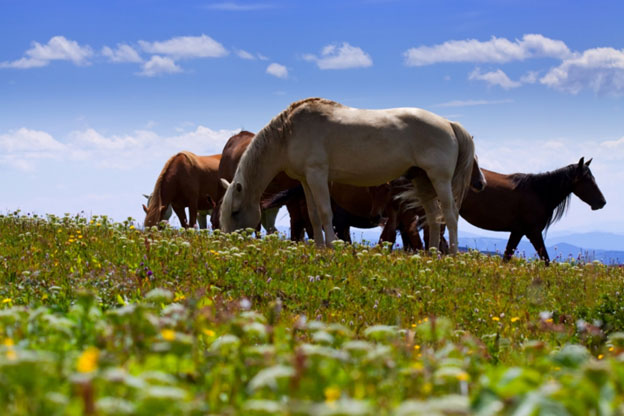
There’s more to a green pasture than meets the eye, especially when horses are involved. Healthy grazing land isn’t just a scenic backdrop, it plays a vital role in a horse’s overall well-being, influencing everything from digestion to behavior. Yet despite its importance, pasture management is often handled with a shrug and a hopeful eye on the weather. Many rely on routine or guesswork, rotating fields out of habit rather than understanding. The outcome is familiar and frustrating: worn-out grass, compacted soil, and land that struggles to recover season after season.
That passive approach is starting to shift. With live satellite images and analytics, landowners can finally see their pastures with clarity and precision. These tools reveal patterns and problems that would otherwise go unnoticed, making it easier to balance grazing pressure, protect soil health, and plan ahead.
Hidden Struggles Behind Healthy Grazing
Pasture management may look straightforward in theory: move the horses, let the grass recover, repeat. But anyone working the land knows it rarely plays out that smoothly. Grass grows unevenly. Weather patterns shift without warning. Some areas flourish while others turn to bare soil under constant trampling. And when every acre needs to support both animal health and long-term land use, the pressure to get it right can be relentless.
One of the toughest challenges is preventing overuse. When horses graze too long in one spot, the grass loses its ability to rebound. What starts as a patchy field can quickly become a worn-out stretch of dirt, opening the door to soil erosion and invasive plants. Then come the seasons. Spring might offer a burst of growth, giving a false sense of abundance, but summer heat or autumn rains can flip the script overnight. Without consistent visibility into what’s happening across the pasture, many decisions come too late. By the time the damage is clear, recovery takes time, effort, and in many cases, money that could have been saved.
Tools Transforming Pasture Management
Fortunately, land management is no longer limited to pacing the fields and relying solely on experience. A new generation of tools is transforming how ranchers and horse owners care for both their pastures and their animals. These innovations are not just convenient additions to old routines. They are changing the way we understand the land, helping people make decisions that are rooted in evidence instead of habit.
Drones are becoming a common sight on modern ranches, flying overhead to capture high-resolution images that reveal grazing patterns, soil wear, and even water buildup in low-lying areas. Instead of waiting for visible damage to appear, ranchers can now detect early signs of stress and act before problems take hold. Soil sensors provide another layer of insight, quietly monitoring moisture levels, pH balance, and nutrient availability around the clock. Combined with small-scale weather stations that track hyperlocal changes in temperature, wind, and precipitation, these tools help build a clearer picture of what is really happening at ground level.
Perhaps the most revolutionary shift comes from above. With the ability to view live satellite images, landowners can now see large-scale patterns across their property that would be impossible to spot on foot. These satellite visuals show how vegetation is growing, where it's thinning, and how those trends change over days, weeks, and seasons. This kind of perspective brings a level of clarity that has never been available before. It turns guesswork into strategy, helping to protect the land from overuse while ensuring horses have access to consistent, high-quality forage.
How Satellites Guide Smarter Grazing Decisions
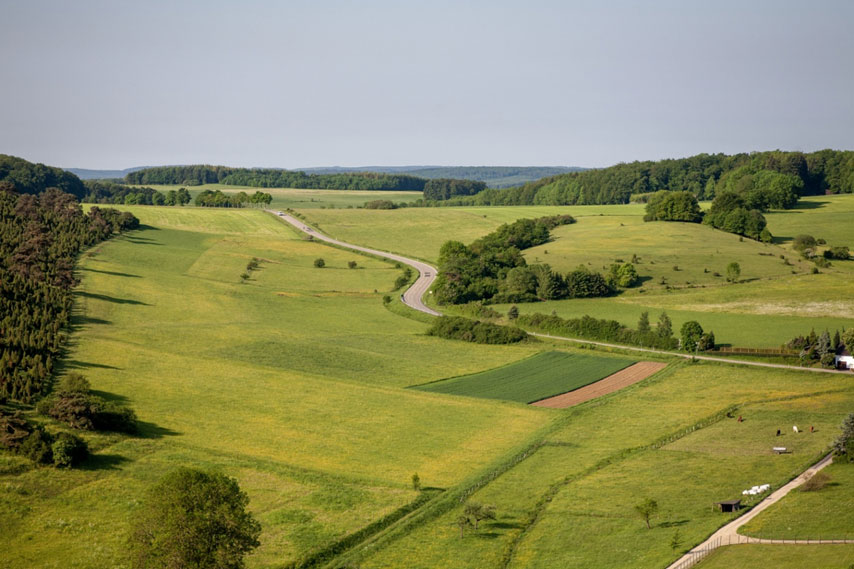
Satellite data is not just about seeing your pasture from above but about understanding it on a deeper level. When used for pasture mapping, this technology helps define the true boundaries and conditions of each grazing zone, identifying which areas are thriving and which ones are under stress. It takes the guesswork out of land management by turning distant pixels into clear indicators of ground-level reality.
With EOSDA LandViewer, these insights become both accessible and actionable. The platform allows users to track vegetation health across seasons, compare year-over-year changes, and flag trouble spots before they turn into larger issues. By analyzing plant vitality through vegetation indices like NDVI, LandViewer helps pinpoint where forage is strongest and where recovery is needed. This makes it easier to rotate animals strategically, reduce pressure on vulnerable areas, and make the most of every acre.
The ability to see live satellite images adds a real-time dimension to this process. Instead of waiting for signs of overuse to appear on the ground, managers can act early, adjusting grazing schedules or supplementing feed when needed. And because live satellite imagery captures the big picture, it reveals connections that might be missed in day-to-day observation: like how a dry patch in one field could be tied to drainage issues or how pasture health improves after a rest period. With these tools, grazing decisions become smarter, timing becomes sharper, and the land gets the care it needs to stay productive long term.
Greener Fields Through Smarter Strategies
By bringing together satellite technology, soil sensors, drones, and smart data platforms, pasture management becomes more precise and less reactive. These tools offer a clearer view of land conditions, helping to prevent overgrazing, support faster regrowth, and make better use of every acre. With accurate insights at their fingertips, ranchers can provide more consistent nutrition for their horses, protect soil health, and adapt to seasonal shifts before they become problems. In the end, this tech-driven approach leads to healthier animals, stronger pastures, and a more sustainable relationship between land and livestock.
You can find more interesting stories in our section on Health & Education.
- Managing Energy and Motivation While Caring for Your Horses
- Five Tips for Hiring a Horse Shipper
- Tall Fescue Toxicity in Mares
- Healthy Joints for Years of Happy Trails
- $20,000 in student scholarships offered by Purina Animal Nutrition
- Saddle Fit Differences Between Men and Women
- Use of Standardized Exercise Tests in Equine Research
- Helping all horses live healthier lives
- 5 Tips For Keeping Aged Horses Fit To Compete
- Fruits are Fabulous, even for Insulin Resistant Horses!
- 12 Tips for Being a Good Member of Your Boarding Barn
- $10,000 Equestrian Merit Scholarship
- Non-GMO is NOT Necessarily Safe
- Consider Beet Pulp Instead of Oats
- Five Tips About Dummy Foals
- The Role of Nutrition in Managing Muscle Disorders
- Secrets of Successful Riding Instructors
- Horse Veterinarians in Alabama
- Horse Veterinarians in Alaska
- Horse Veterinarians in Arizona