





Health & Education
We all want the best care possible for our horses. The Heath & Education section covers both Learning Institutions, Organizations as well as many sources for equine assistance including Veterinarians and Farriers.
For those who want a to formally study horses, the Education section includes College Riding, Equine Studies, and Veterinary Schools. Learn about the wide variety of horses in the Horse Breeds section. Supplements and Treatments Therapy are also included in the section.
Everyone can learn from Fine Art and there are some specialty Museums that might surprise you.
Horses as a therapy partner enrich the lives of the disabled. These facilities are listed in our Therapeutic Riding section. To help children and young adults build confidence and grow emotionally, please see the resources available on the Youth Outreach page.
Looking for a place to keep your horse? You can find it in the Horse Boarding section. Traveling? Find a Shipping company or Horse Sitting service if your horse is staying home!
Want to stay up to date with the latest training clinics or professional conferences? Take a look at our Calendar of Events for Health & Education for the dates and locations of upcoming events.
Do we need to add more? Please use the useful feedback link and let us know!
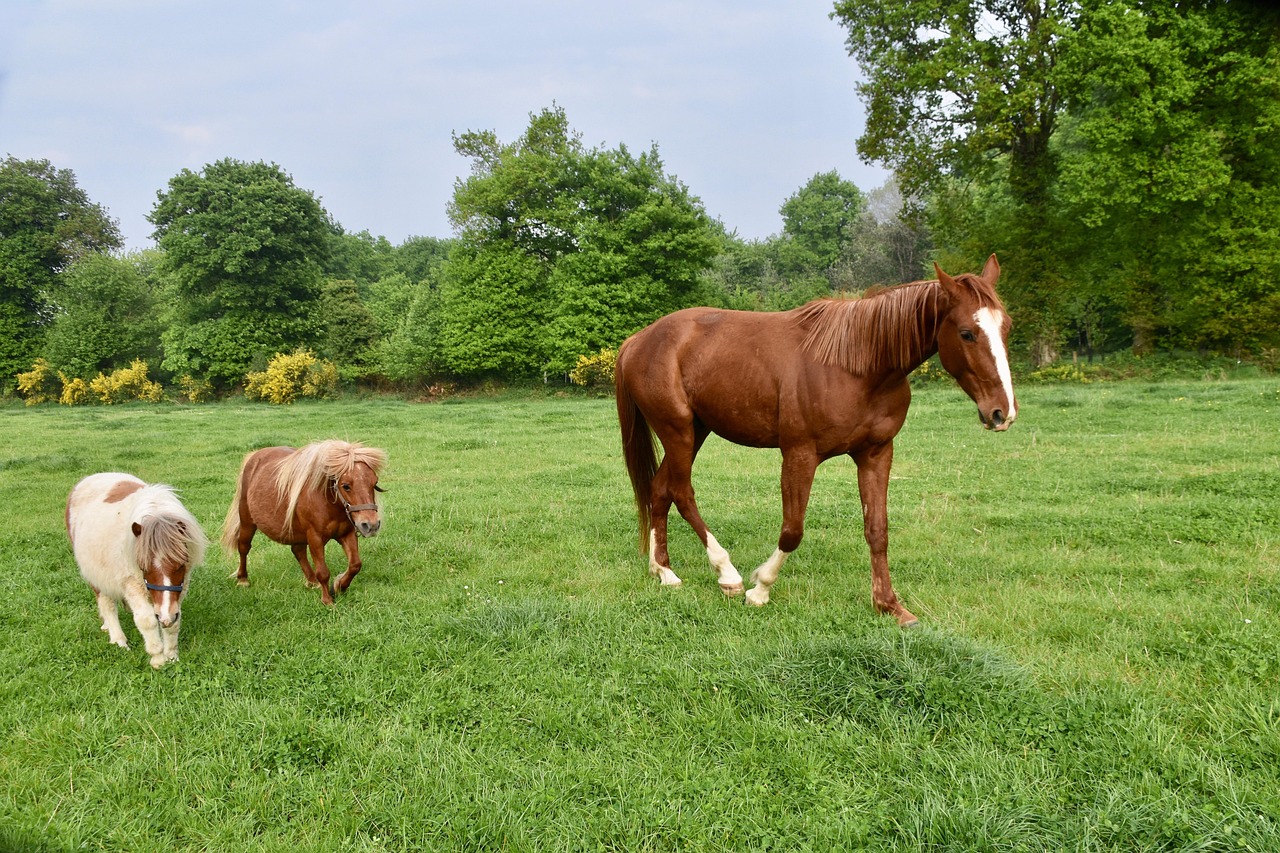
The average horse stands approximately 15 to 16 hands tall and weighs about 900 to 1,200 pounds (408 to 544 kg). Horse size is measured in "hands," where one hand equals 4 inches. This height is measured from the ground to the withers, the highest point of the horse's back where the neck meets the torso.
Key Size Metrics
- Average Height: 14 to 16 hands (56 to 64 inches; 142 to 163 cm).
- Average Weight: 900 to 1,200 pounds (408 to 544 kg).
- Average Length: Approximately 8 to 9 feet from nose to tail.
Variations by Breed Category
While many horses fall into the "average" range, sizes differ drastically by type:
- Light Riding Horses: (e.g., Arabians, Thoroughbreds) usually stand 14–16 hands and weigh 900–1,150 lbs.
- Draft Horses: (e.g., Clydesdales, Shires) are significantly larger, often 16–18+ hands tall and weighing 1,800–2,200+ lbs.
- Ponies: Generally defined as equines under 14.2 hands (58 inches), often weighing between 400 and 900 lbs.
- Miniature Horses: The smallest equines, standing under 9.5 hands and weighing only 150–350 lbs.
The records for the largest and smallest horses in history are held by two extraordinary animals that represent the extremes of the equine world.
The Largest Horse: Sampson
- Breed: Shire Horse
- Height: 21.25 hands (7 feet 2.5 inches or 219.7 cm)
- Weight: Approximately 3,360 lbs (1,524 kg)
- Legacy: Foaled in 1846 in Bedfordshire, UK, Sampson remains the tallest and heaviest horse ever documented by Guinness World Records. For comparison, the most recent record-holder for the tallest living horse was Big Jake, a Belgian gelding who stood 20 hands 2.75 inches before passing away in 2021.
The Smallest Horse: Thumbelina
- Breed: Miniature Horse (born with dwarfism)
- Height: 17.5 inches (44.5 cm or roughly 4.1 hands)
- Weight: 57 lbs (26 kg)
- Legacy: Born in 2001 in St. Louis, Missouri, Thumbelina holds the record for the smallest horse ever recorded. She passed away in 2018. Currently, the record for the smallest living male horse is held by Bombel, who stands 22.36 inches (56.7 cm) tall.
You can find more informative articles in our section on Health & Education. Take a look at our Curated Amazon Store for our selections in a wide variety of categories!
Are you interested in promoting your business or sharing content on EIE? Contact us at info@equineinfoexchange.com

While there are over 400 horse breeds worldwide, a few stand out as the most popular horse breeds due to their versatility, temperament, and specialized skills.
The Five Most Popular Horse Breeds
- American Quarter Horse: Often cited as the most popular breed in the world, it has the largest breed registry with nearly 6 million horses. A very versatile breed, they are famous for their explosive sprinting speed over a quarter-mile and their calm, level-headed nature, making them favorites for both ranch work and family riding.
- Thoroughbred: The most popular racing horse in North America, known for its incredible speed, agility, and "hot-blooded" spirit. Beyond the track, they excel in competitive English disciplines like show jumping and dressage.
- Arabian: One of the world’s oldest and most influential breeds, the Arabian is prized for its unparalleled stamina and striking appearance, featuring a distinctive dished head and high tail carriage. They are heavily utilized in endurance riding.
- American Paint Horse: Highly sought after for their unique, flashy coat patterns, these horses combine the athletic "stock horse" build of a Quarter Horse with the eye-catching colors of a pinto.
- Appaloosa: Instantly recognizable by their colorful spotted coats, Appaloosas were originally developed by the Nez Perce tribe. They are valued as hardy, versatile horses for everything from trail riding to high-level competition.
Other Highly Popular Breeds
- Morgan: One of the earliest breeds developed in the U.S., the Morgan is loved for its incredible versatility, courage, and friendly personality.
- Tennessee Walking Horse: A "gaited" breed famous for its smooth, four-beat running walk, which provides an exceptionally comfortable ride for long distances.
- Warmbloods: A category of European sport horses (like the Hanoverian or Dutch Warmblood) that dominate modern Olympic-level jumping and dressage.
- Friesian: A majestic black horse from the Netherlands known for its elegant movement and long, flowing mane and tail.
Are you looking for a horse breed suited for a specific activity, like trail riding or competitive jumping, or are you a beginner looking for your first horse? There are many popular breeds for every riding discipline!
You can find more informative articles in our section on Health & Education. Take a look at our Curated Amazon Store for our selections in a wide variety of categories!
Are you interested in promoting your business or sharing content on EIE? Contact us at info@equineinfoexchange.com
- What is the Lifespan of a Horse and Which Horse Breeds Live the Longest?
- How to Identify Horse Breeds!
- Are Donkeys Good Horse Companions? Learn More!
- The Essential Horse Care Tips
- Tips to Keep Horses Safe in Ice and Snow
- Adjusting Horse Diets in Winter: Is It Necessary?
- The Impact of Light on Horse Reproduction With Dr. Barbara Murphy
- The Overweight Horse – A New Year’s Resolution
- Survey Reveals Emotional and Practical Challenges in Managing Horse Weight
- Why Did My Horse Just Do That?
- Staying Warm This Winter - WSI Sportswear at Equine Affaire 2025
- A Guide for Livestock and Equine Grooming
- How Feeding Routine, Age and Workload Affect Joint Supplement Needs
- Vitamin E Requirements and Testing Recommendations in Horses
- Semican Horse Feed at Equine Affaire 2025
- CBD and other Cannabinoids – How they can benefit you, your horses, and your pets
- Causes of Death in Retirement Facilities for Horses
- "Purina" at Equine Affaire 2025
- "Equi-Analytical" at Equine Affaire 2025
- "Smart Equine" at Equine Affaire 2025