




Health & Education
We all want the best care possible for our horses. The Heath & Education section covers both Learning Institutions, Organizations as well as many sources for equine assistance including Veterinarians and Farriers.
For those who want a to formally study horses, the Education section includes College Riding, Equine Studies, and Veterinary Schools. Learn about the wide variety of horses in the Horse Breeds section. Supplements and Treatments Therapy are also included in the section.
Everyone can learn from Fine Art and there are some specialty Museums that might surprise you.
Horses as a therapy partner enrich the lives of the disabled. These facilities are listed in our Therapeutic Riding section. To help children and young adults build confidence and grow emotionally, please see the resources available on the Youth Outreach page.
Looking for a place to keep your horse? You can find it in the Horse Boarding section. Traveling? Find a Shipping company or Horse Sitting service if your horse is staying home!
Want to stay up to date with the latest training clinics or professional conferences? Take a look at our Calendar of Events for Health & Education for the dates and locations of upcoming events.
Do we need to add more? Please use the useful feedback link and let us know!
by Kentucky Equine Research Staff
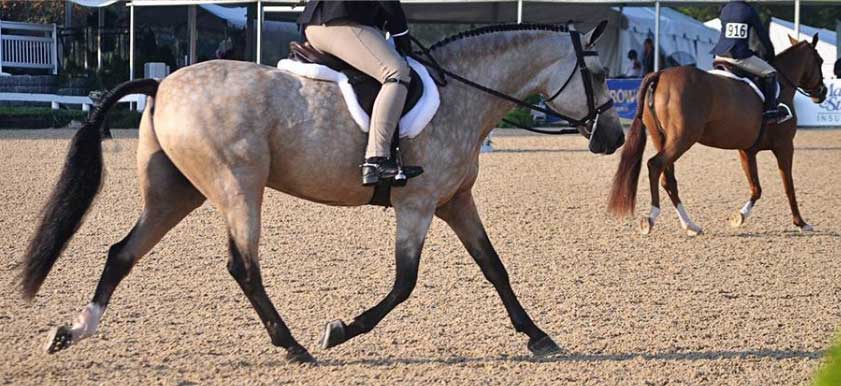
A proof-of-concept study revealed that a novel intra-articular nanogel infused with medications, referred to as an intra-articular drug delivery system, is a promising therapy for horses with osteoarthritis.* If effective, nanogels, also called hydrogels, could halt disease progression, restore joint function, and improve mobility.
According to the research team, a functionalized nanogel containing bioactive molecules serves two purposes. First, the nanogel, which contains hyaluronic acid, provides joint lubrication and has other viscoelastic properties. Second, it serves as a drug delivery system, capable of providing the sustained release of biomolecules possessing analgesic, anti-inflammatory, anticatabolic, or pro-anabolic features that are key to the long-term management of osteoarthritis.
“To date, nanogels have been studied in vitro, in a laboratory setting, showing positive features such as chondroprotection and cartilage-building effects,” said Catherine Whitehouse, M.S., a nutrition advisor for Kentucky Equine Research. “A small study in healthy horses was also conducted showing no adverse events associated with the gel.”
In the current study, the researchers used a functionalized nanogel in eight horses diagnosed with naturally occurring OA of the fetlock or coffin joint. Horses were all used for international level competition, including showing jumping and three-day eventing. All horses showed grade two or three lameness (out of five), and radiographs disclosed a combination of joint space narrowing, osteophyte formation, subchondral bone sclerosis, and synovitis, all hallmarks of osteoarthritis.
The nanogel used in this study was functionalized (i.e., changed with a specific intent in mind) with two compounds: endoethelin type A and bradykinin B1 receptor agonists that have anti-inflammatory and chondroprotective properties.
A single injection was administered at the start of the study, and horses were evaluated at week two. If horses were sound on soft ground and had a lameness score of two or less, they were instructed to gradually return to full workload by week six. Full follow-up examinations including radiographs and ultrasound exams were performed at week six by the researchers, and referring veterinarians submitted lameness video evaluations at week twelve. Referring veterinarians also reported lameness status twelve months following the injection.
Key findings included:
- The functionalized nanogel was well tolerated with no major adverse events following Mild, self-resolving joint swelling occurred in two horses.
- At week six, one horse returned to competition, two resumed training, and three were in full flat work.
- At week twelve, seven of the eight horses had improved lameness scores compared to baseline: four by one grade and three by two grades. Two horses had complete resolution of lameness.
- Four horses achieved a return to the same competition level as before the onset of lameness. One horse also returned to the same highest level of competition but competed at fewer events. One horse returned to a lower level of competition, and two horses were retired.
- Of the six horses that remained in competition, no recurrence of lameness was reported, and no additional treatments were performed for the OA between week twelve and the last follow-up.
These results show a relatively delayed but prolonged clinical effect. This nanogel therefore demonstrates “promising potential for long-lasting return to competition.”
“Steps can be taken early in an athletic horse’s life to help protect its joints. Multiple studies have shown that offering oral joint health supplements containing glucosamine and chondroitin sulfate have a prophylactic effect, helping maintain joint function,” said Whitehouse.
Read more: Arthritis in Horses: Use of Intra-Articular Nanogels
Serena Heppes explains how to safely adjust the stirrups and girth while mounted. This is a educational and safety video brought to you by the Certified Horsemanship Association (CHA) For more information on the largest certifying body of riding instructors and barn managers in North America, Certified Horsemanship Association, please visit www.CHA.horse. To find a certified equine professional or accredited equine facility near you, visit www.CHA.horse
Read more: Adjusting the Stirrups and Girth While Mounted with Serena Heppes
- Hay Nets and Slow Feeders for Horses: Pros and Cons
- Promise of Spring: Seasonal Changes in the Dietary Management for Horses
- What is the Average Horse Size? Which Horses Were the Tallest & Smallest?
- What are the Top 5 Most Popular Horse Breeds?
- What is the Lifespan of a Horse and Which Horse Breeds Live the Longest?
- How to Identify Horse Breeds!
- Are Donkeys Good Horse Companions? Learn More!
- The Essential Horse Care Tips
- Tips to Keep Horses Safe in Ice and Snow
- Adjusting Horse Diets in Winter: Is It Necessary?
- The Impact of Light on Horse Reproduction With Dr. Barbara Murphy
- The Overweight Horse – A New Year’s Resolution
- Survey Reveals Emotional and Practical Challenges in Managing Horse Weight
- Why Did My Horse Just Do That?
- Staying Warm This Winter - WSI Sportswear at Equine Affaire 2025
- A Guide for Livestock and Equine Grooming
- How Feeding Routine, Age and Workload Affect Joint Supplement Needs
- Vitamin E Requirements and Testing Recommendations in Horses
- Semican Horse Feed at Equine Affaire 2025
- CBD and other Cannabinoids – How they can benefit you, your horses, and your pets